

Brand Deep Dives
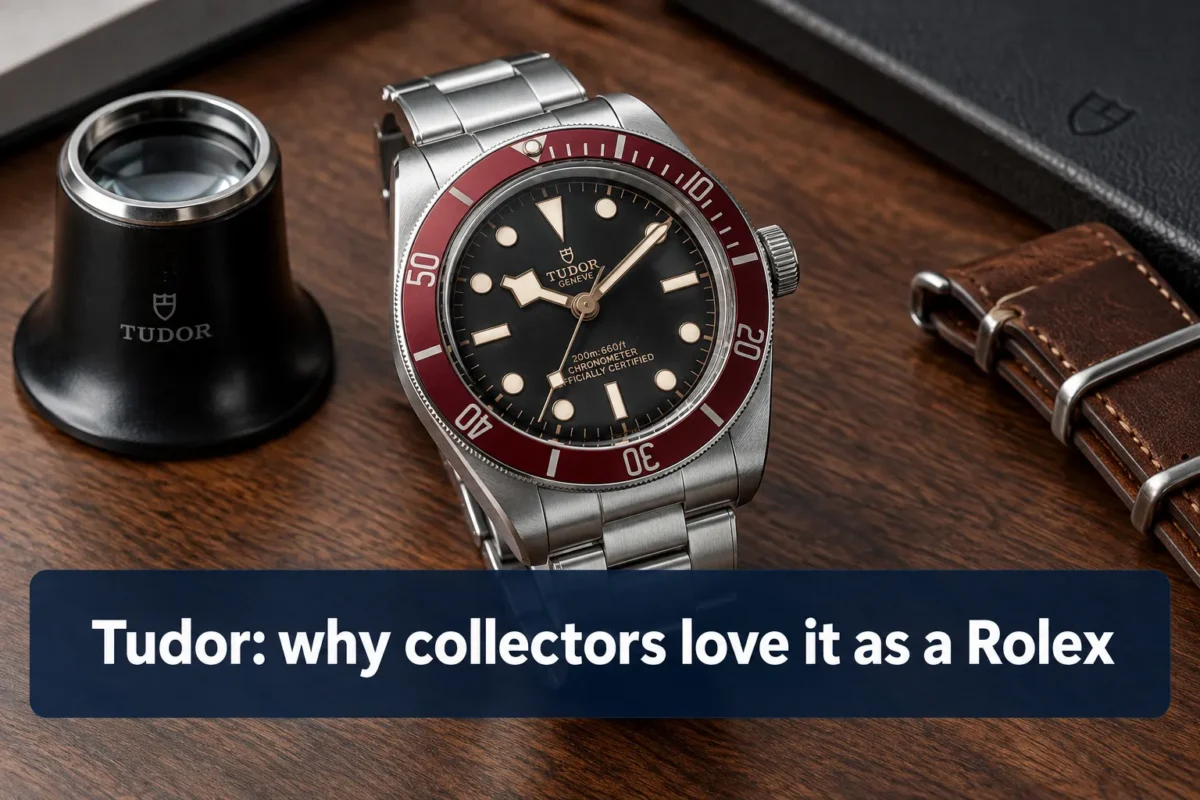
Tudor: Why Collectors Love It as a Rolex Alternative
Sep
Last updated: September 28, 2026
Quick Answer
Collectors choose Tudor because it delivers Rolex-grade engineering, a shared design heritage, and in-house Swiss movements at a fraction of Rolex’s retail and waitlist pressure. Tudor: why collectors love it as a Rolex alternative comes down to three factors: authentic historical ties to Rolex, genuinely distinct modern watchmaking, and immediate availability on references that rival Rolex sports models in toughness and finish. For buyers priced out of Rolex allocation lists, Tudor offers a credible, self-respecting path into serious Swiss horology.
Key Takeaways
- Tudor was founded in 1926 by Hans Wilsdorf, the same man behind Rolex, specifically to sell Rolex-level reliability at a lower price.
- Tudor now builds its own in-house movements (MT5000 and MT9000 series) rather than relying solely on outsourced calibers.
- Pre-owned Tudor Black Bay Fifty-Eight models trade around 2,900 to 5,000 USD, well under comparable Rolex steel sports watches.
- The Black Bay 58, Pelagos, and Black Bay GMT are the most requested modern Tudor references among collectors today.
- Tudor watches are widely regarded as reliable, though inconsistent aftermarket parts availability is a common complaint versus Rolex’s global service network.
- Tudor holds value respectably in the pre-owned market, though not with the same appreciation velocity as steel Rolex sports models.
- Buyers should purchase only from Luxury Watch Experts offering Certified Authentic pieces with Full Set Complete documentation.
- Tudor suits buyers who want authentic heritage and toughness without competing for Rolex allocation or paying a scarcity premium.
What Is Tudor’s Brand History and Its Connection to Rolex?
Tudor was registered as a trademark in 1926 by Hans Wilsdorf, the founder of Rolex, with a specific mission: offer the durability and precision associated with Rolex at a price point accessible to a broader clientele. This was never a licensing arrangement or a copycat brand. It was a deliberate second tier within the same corporate family, sharing engineering philosophy while operating under its own identity.
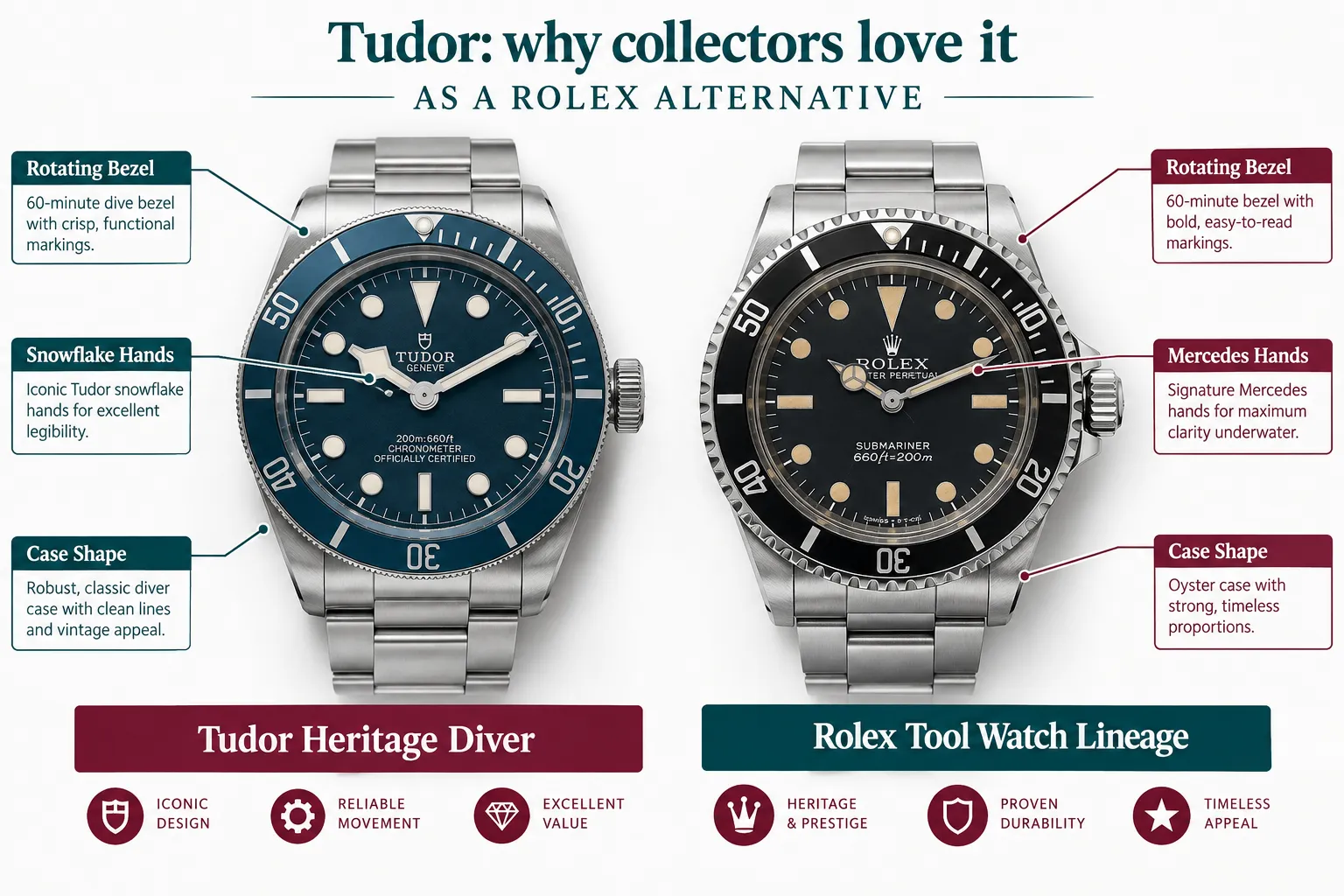
For decades, Tudor watches used Rolex-made cases and bracelets paired with outsourced movements from suppliers like ETA, which kept costs down while preserving structural integrity. That changed decisively after 2010, when Tudor relaunched globally with the Heritage collection and began investing heavily in its own manufacturing capability.
- 1926: Hans Wilsdorf registers the Tudor trademark as a value-oriented companion brand to Rolex.
- 1950s-1970s: Tudor supplies military and dive watches to the French Navy, U.S. Navy, and other institutional buyers, cementing tool-watch credibility.
- 2010-2015: Tudor re-enters the U.S. market and relaunches its Heritage line, reviving Snowflake-hand aesthetics.
- 2015 onward: Tudor introduces in-house movements (MT5612, then MT5602 and beyond), ending its full dependence on third-party calibers.
This history matters to collectors because it means Tudor’s connection to Rolex is genealogical, not cosmetic. The brand earned its tool-watch reputation independently, through decades of institutional use, long before it became a fashionable Rolex alternative.
How Is Tudor Different From Rolex?
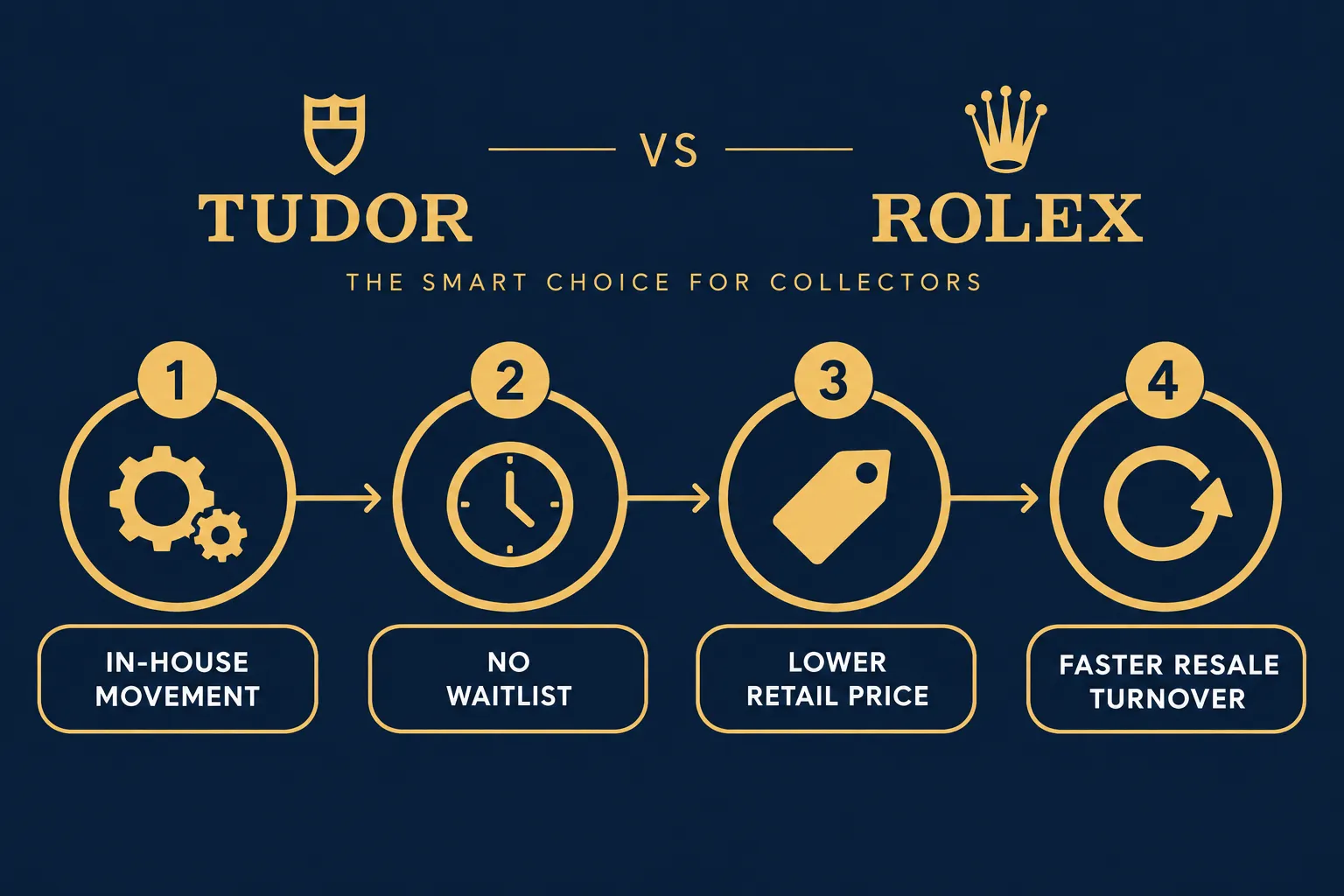
Tudor and Rolex share design DNA and corporate ownership, but they operate as distinct brands with different manufacturing scale, pricing philosophy, and release cadence. Rolex controls nearly every component in-house at massive volume, while Tudor blends select in-house movements with a leaner, faster-moving product strategy that allows more frequent colorways and experimental references.
| Factor | Tudor | Rolex |
|---|---|---|
| Movement sourcing | In-house MT-series calibers, some METAS-certified | Fully in-house, COSC-certified across the range |
| Case materials | Steel, titanium (Pelagos), bronze (limited runs) | Steel, gold, platinum, Rolesor combinations |
| Release pace | Frequent dial and colorway variants yearly | Conservative, incremental changes |
| Waitlists | Generally immediate or short-wait availability | Multi-year waitlists on flagship sports models |
| Price tier | Entry to mid-range Swiss luxury | Upper-range luxury with scarcity premium |
| Brand positioning | Enthusiast-driven, tool-watch heritage | Status symbol, global prestige icon |
The clearest distinction is philosophical. Rolex plays it conservative and lets scarcity do the talking. Tudor experiments more freely with dial colors, case sizes, and complications like its 2025 debut moonphase, which gives collectors more to chase without the multi-year wait.
Decision rule: Choose Rolex if global brand recognition and long-term resale liquidity matter more than novelty. Choose Tudor if you want faster access to genuinely well-built Swiss watchmaking and enjoy variety in your collection.
Why Is Tudor Cheaper Than Rolex, and How Do Prices Compare?
Tudor is cheaper than Rolex mainly because of brand positioning, not because of inferior materials or craftsmanship. Rolex commands a scarcity premium built over decades of controlled production and cultural dominance, while Tudor deliberately prices itself as the accessible sibling within the same ownership group.
Pre-owned pricing illustrates the gap clearly. As of August 2026, a Tudor Black Bay Fifty-Eight typically trades between roughly 2,900 and 5,000 USD on the secondary market, depending on dial color and bracelet configuration. A comparable steel Rolex sports watch, such as the Submariner, commonly commands two to three times that figure once demand premiums are factored in.
Several structural reasons explain the price difference:
- Production volume. Tudor produces at a scale that avoids the extreme scarcity Rolex cultivates on its flagship sports references.
- Retail availability. Tudor rarely requires a waitlist, removing the gray-market markup that inflates Rolex pricing.
- Brand equity, not build quality. Tudor’s movements and cases meet genuine Swiss luxury standards; the price gap reflects marketing history and demand, not corner-cutting.
- Material choices. Rolex uses more precious metal combinations (918 Rolesor, platinum) across its catalogue, while Tudor stays focused on steel and titanium.
Common mistake: Assuming a lower price means a lesser watch. Tudor’s METAS Master Chronometer-certified references, like the Black Bay 58 Burgundy, meet the same anti-magnetic and accuracy standards found in premium Omega and Rolex chronometers, at a materially lower price.
Do Tudor Watches Hold Their Value? Is Tudor a Good Investment Watch?
Tudor watches hold value reasonably well in the pre-owned market, but they do not appreciate with the same speed or consistency as steel Rolex sports models. Tudor should be viewed as a well-built luxury asset with modest depreciation resistance, not a speculative investment vehicle.
Collectors and investors should keep three realities in mind:
- Depreciation is gentler than most luxury watches, but slower to reverse than Rolex. A Tudor purchased at retail may dip slightly in early resale value before stabilizing, whereas iconic Rolex references often hold or exceed retail almost immediately due to allocation scarcity.
- Discontinued and limited references perform best. Vintage Snowflake Submariners and early Black Bay references with unique dial variants tend to show the strongest secondary-market resilience.
- Condition and completeness drive resale outcomes. A Full Set Complete Tudor, meaning original box, papers, warranty card, and unworn links, consistently commands a premium over a watch-only sale.
Edge case: Limited collaborations, such as the carbon-cased Black Bay Chrono tied to a Formula One partnership, can outperform standard production models because scarcity and story combine to attract dedicated collector demand.
Decision rule: Treat Tudor as a durable luxury purchase you will enjoy wearing, with reasonable resale protection, rather than a primary investment-grade asset the way a discontinued Rolex Daytona might function.
Best Tudor Watch Models for Collectors Seeking a Rolex Alternative
The most sought-after modern Tudor references among serious collectors are the Black Bay 58, the Pelagos and Pelagos FXD, the Black Bay GMT, and the Black Bay Pro. Each occupies a distinct niche that echoes a specific Rolex counterpart while retaining Tudor’s own visual signature.
- Black Bay 58. A 39mm heritage diver with vintage Submariner proportions and signature snowflake hands. Widely considered the cleanest expression of Tudor’s contemporary watchmaking and the single most requested modern reference.
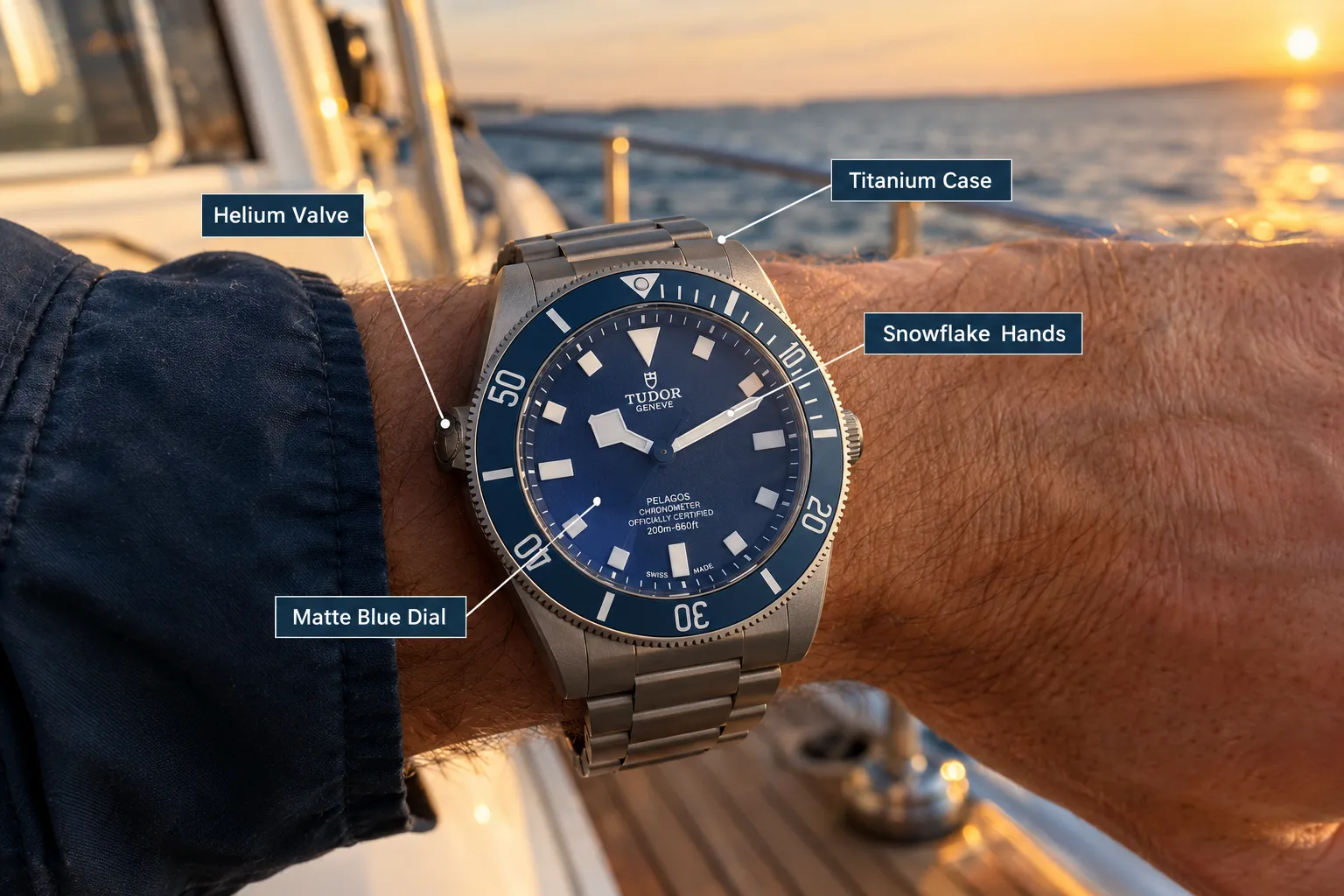
- Pelagos and Pelagos Ultra. Titanium tool watches built for serious depth performance. The Pelagos Ultra reaches 1,000 meters of water resistance in a 43mm Grade 2 titanium case, the first mass-produced Tudor to cross that depth threshold.
- Black Bay GMT. A dual-time reference with a Pepsi-style bezel that draws obvious comparison to the Rolex GMT-Master II, at a fraction of the acquisition cost.
- Black Bay Pro. Its opaline dial and fixed 24-hour bezel closely echo the layout of a Rolex Explorer II, appealing to collectors who love that silhouette but want faster availability.
- Black Bay 54. A smaller-cased, retro-proportioned diver that appeals to buyers seeking vintage scale over modern oversized cases.
- Tudor Royal. A day-date dress watch positioned as a genuine alternative in the segment dominated by the Rolex Datejust and Day-Date.
Quick example: A collector who admires the deep-diving credentials of the Rolex Sea-Dweller but wants titanium construction and a lower entry price will find the Pelagos a natural substitute rather than a compromise.
Tudor vs Omega: Which Is the Better Rolex Alternative?
Tudor generally wins on Rolex-family heritage and shared design language, while Omega wins on chronometry pedigree and broader complication variety, including moonwatch and space heritage. The better choice depends on whether a collector values genealogical proximity to Rolex or diversified horological storytelling.
| Consideration | Tudor | Omega |
|---|---|---|
| Rolex design lineage | Direct historical connection | No shared history |
| Certification standard | METAS Master Chronometer on select models | METAS Master Chronometer across most current lines |
| Price range | Entry to mid-luxury | Entry to mid-luxury, slightly wider range |
| Iconic references | Black Bay, Pelagos | Speedmaster, Seamaster |
| Collector narrative | “Rolex’s sibling brand at its best” | Independent heritage tied to space and diving history |
Decision rule: Choose Tudor if the appeal of Rolex ownership itself, even by association, matters to you. Choose Omega if you want a brand with its own standalone prestige narrative and wider chronometer certification across the catalogue.
Are Tudor Watches as Reliable as Rolex? Common Problems to Watch For
Tudor watches are broadly as reliable as Rolex in day-to-day performance, since both brands use robust Swiss movements built for decades of service. The most common issues collectors report with Tudor relate to service network density and aftermarket parts availability rather than mechanical failure.
Typical concerns worth understanding before buying:
- Service center access. Rolex operates a denser global network of authorized service centers. Tudor owners in smaller markets may face longer turnaround times for routine servicing.
- Bracelet stretch on older references. Pre-2015 Tudor bracelets sometimes show more link wear than Rolex Oyster bracelets from the same era, though this has improved significantly on current production.
- Movement transition confusion. Buyers researching older Tudor watches sometimes struggle to determine whether a specific reference year used an ETA-based movement or an in-house MT caliber, which affects both performance expectations and resale value.
- Water resistance gaskets on vintage pieces. As with any vintage dive watch, gaskets on older Tudor Submariners require replacement to maintain rated depth performance.
Common mistake: Assuming every Tudor uses an in-house movement. Confirm the specific reference and production year, since Tudor’s transition to in-house calibers happened gradually between 2015 and the early 2020s across different collections.
Where to Buy Authentic Tudor Watches With Confidence
Authentic Tudor watches should be purchased only through authorized dealers or established Luxury Watch Experts who provide Certified Authentic verification, complete documentation, and transparent condition reporting. This single decision matters more for long-term satisfaction than the specific reference chosen.
A trustworthy purchase should include:
- Certified Authentic verification. Independent authentication of movement, case, and dial matching the stated reference number.
- Full Set Complete documentation. Original box, warranty card, and papers where available, which materially affects resale value later.
- Confirmation of factory warranty status. Knowing whether a piece is Under Factory Warranty or requires an extended service plan changes the total cost of ownership.
- Fully Insured Overnight Shipping. Protects the buyer financially during transit, which matters for any Investment-Grade Timepieces purchase.
- Transparent condition grading. Clear photography and honest disclosure of any case polishing, dial aging, or bracelet stretch.
Edge case: Gray-market sellers may offer attractive pricing on Rare & Highly Sought After references, but without Authenticity Guaranteed protection, buyers risk acquiring a watch with mismatched components or an undisclosed service history. Working with dealers who are Trusted Worldwide and offer White-Glove Service removes this uncertainty entirely.
Who Should Buy a Tudor Watch, and What Warranty and Service Costs to Expect
Tudor suits buyers who want authentic Swiss watchmaking heritage, genuine durability, and design connected to Rolex, without the multi-year waitlists or scarcity premiums that define the modern Rolex market. It is a strong fit for first-time luxury watch buyers, younger collectors building a first serious collection, and value-conscious enthusiasts who still want prestige.
Tudor is likely the right choice if:
- You want Rolex-adjacent design language without competing for allocation.
- You plan to wear the watch actively, including diving or daily rough use, and want tool-watch durability.
- You are building a first Investment-Grade Timepieces collection and want strong value retention without top-tier Rolex pricing.
Tudor may not be the right choice if:
- Maximum brand prestige and global recognition are the primary purchase drivers.
- You are prioritizing pure investment appreciation over ownership enjoyment.
On warranty and service: current Tudor watches carry a five-year international warranty from the date of purchase through an authorized dealer, with no registration required, matching Rolex’s warranty structure. Routine servicing intervals are similarly recommended around every ten years for the in-house MT-series movements, and service pricing generally runs lower than Rolex due to simpler parts sourcing and a smaller service network footprint. Buyers should always confirm a watch is Under Factory Warranty at the time of purchase, since this materially reduces near-term ownership costs.
Conclusion
Tudor earns its place in serious collections on merit, not merely as a fallback when Rolex is unavailable. The brand’s 1926 origin as Hans Wilsdorf’s value-driven companion to Rolex gives it authentic historical standing, while its modern in-house movements, METAS-certified references, and expanding catalogue of Black Bay and Pelagos models prove it can compete on engineering terms. Tudor: why collectors love it as a Rolex alternative ultimately comes down to accessible pricing, immediate availability, and a design language familiar enough to satisfy Rolex admirers without feeling like a compromise.
For buyers ready to move forward, the next step is straightforward: identify the reference that fits your wrist and use case, whether that is a Black Bay 58 for everyday versatility or a Pelagos for serious dive performance, then purchase only through dealers offering Certified Authentic verification, Full Set Complete documentation, and transparent warranty status. That discipline protects both enjoyment and resale value for years to come.
Frequently Asked Questions
Is Tudor owned by Rolex? Tudor is part of the same corporate group founded by Hans Wilsdorf, but it operates as an independent brand with its own management, factories, and design direction, distinct from Rolex’s own production line.
What is the most popular Tudor watch among collectors? The Black Bay 58 is consistently ranked as the most requested modern Tudor reference, prized for its 39mm vintage proportions and snowflake hands.
Does Tudor use the same movements as Rolex? No. Tudor develops its own MT-series in-house movements, separate from Rolex’s proprietary calibers, though both brands meet rigorous Swiss chronometer standards.
Are Tudor watches a good starter luxury watch? Yes. Tudor is widely recommended for first-time luxury buyers because it offers genuine Swiss craftsmanship and heritage at a lower entry price than Rolex, with immediate retail availability.
How much cheaper is Tudor than Rolex on average? Pricing varies by reference, but comparable steel sports models often show Tudor priced at roughly one-third to one-half of an equivalent Rolex, both at retail and on the pre-owned market.
Can a Tudor watch increase in value over time? Certain limited and discontinued Tudor references, particularly vintage Snowflake Submariners, have shown solid appreciation, though most modern Tudor models are better viewed as value-retentive rather than appreciating assets.
What should I check before buying a used Tudor watch? Confirm the reference number, verify movement type for the production year, check for Full Set Complete documentation, and buy only from a dealer offering Certified Authentic verification.
Is Tudor considered a luxury brand? Yes. Tudor is classified as an accessible luxury Swiss watch brand, sitting between mainstream watchmakers and top-tier houses like Rolex and Patek Philippe.