

Market & Investment
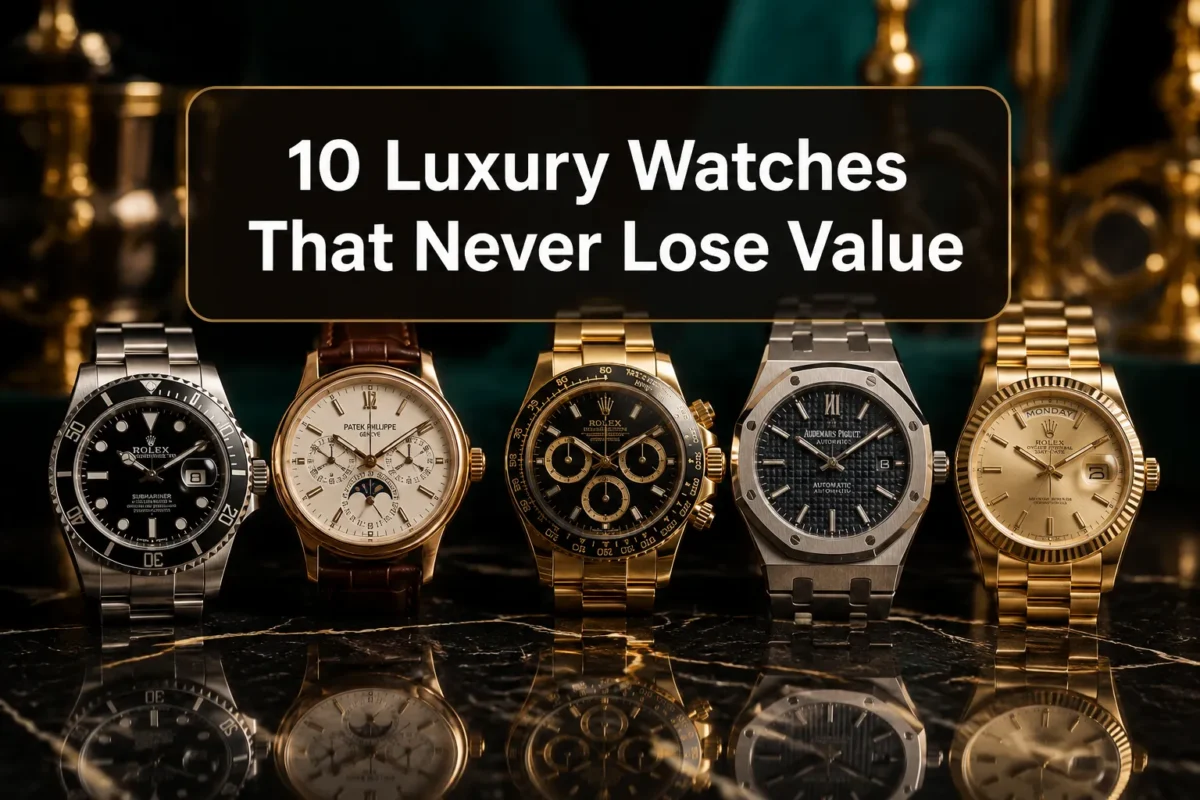
10 Luxury Watches That Have Never Lost Value, Ever
Jul
Last updated: July 20, 2026
Quick Answer: The 10 luxury watches that have never lost value share three defining traits, iconic design, limited production, and the prestige of a house with a century or more of horological heritage. Models from Rolex, Patek Philippe, Audemars Piguet, and Omega consistently trade at or above their original retail prices on the secondary market, making them among the most reliable hard-asset investments available to collectors and high-net-worth buyers today.
Key Takeaways
- Rolex, Patek Philippe, and Audemars Piguet produce the watches most consistently cited as investment-grade timepieces that hold or grow in value.
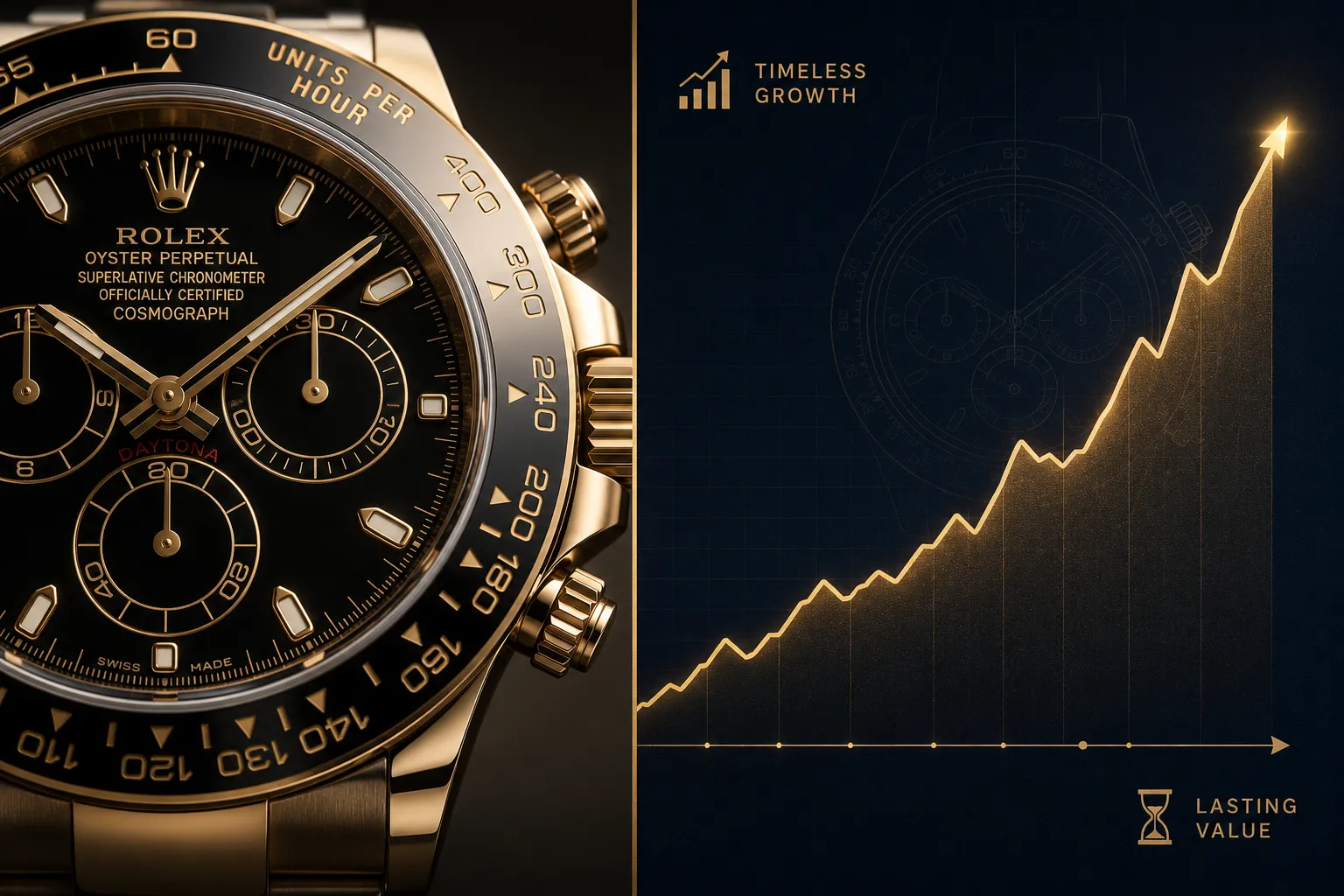
- The Rolex Daytona 116500LN traded between $22,000 and $28,000 on the pre-owned market against a $13,150 retail price, a premium of 67 to 113 percent.
- The Rolex Submariner retains 90 to 110 percent of its purchase price, one of the strongest value-retention rates in any asset class.
- The Patek Philippe Nautilus 5711 regularly exceeds its retail price on the secondary market due to extremely limited production and relentless global demand.
- Condition, completeness of set (box, papers, original bracelet), and provenance are the three factors that most directly determine resale price.
- Buying from a trusted, Authenticity Guaranteed source is non-negotiable for investment-grade purchases.
- Limited-edition references and discontinued references almost always outperform standard production models in appreciation.
- Luxury watches have outperformed many traditional asset classes over the past two decades, though past performance does not guarantee future results.
What Makes a Luxury Watch Hold Its Value Over Time
A luxury watch holds its value when it combines brand prestige, constrained supply, and timeless design in a single reference. These three factors create the conditions for sustained demand that outpaces availability, the fundamental engine of appreciation.
Brand prestige is the foundation. Rolex, Patek Philippe, and Audemars Piguet have spent more than a century building reputations for precision, craftsmanship, and exclusivity. That heritage does not erode. It compounds.
Constrained supply is equally critical. When a manufacturer produces fewer watches than the market demands, as Patek Philippe does with the Nautilus line, waiting lists form, grey-market premiums appear, and resale prices climb above retail.
Timeless design ensures the watch remains desirable across generations. The Rolex Submariner, introduced in 1953, looks as authoritative on a wrist today as it did decades ago. Design that transcends trends insulates a timepiece from the depreciation that affects fashion-driven products.
Additional factors that support value retention include:
- In-house movements with proprietary calibers
- Precious metal cases (gold, platinum) that carry intrinsic material value
- Historical significance or association with notable events or figures
- Consistent demand from a global collector community
- Strong after-sales support and official service networks
For collectors seeking deeper background on movements, materials, and what to look for when buying, the Watch Education Guide at MioJewelry provides a comprehensive foundation.
The 10 Luxury Watches That Have Never Lost Value
These ten references represent the clearest examples of investment-grade timepieces with documented, consistent value retention or appreciation. Each is supported by verifiable secondary market data.
1. Rolex Daytona (Reference 116500LN / 126500LN)
The Rolex Daytona is the benchmark for watches that appreciate in value. The steel 116500LN, released in 2016 at a retail price of $13,150, traded between $22,000 and $28,000 on the pre-owned market, a premium of 67 to 113 percent above retail. Its successor, the 126500LN, has followed the same trajectory.
The Daytona’s appeal rests on its motorsport heritage, its Cerachrom ceramic bezel (introduced in the 116500LN), and the near-impossibility of purchasing one at retail without a significant waiting period. Demand consistently outpaces supply.
Explore Rolex Daytona references currently available through MioJewelry’s Exclusive Collection.
2. Rolex Submariner (References 126610LN / 126613LN)
The Submariner retains 90 to 110 percent of its purchase price, making it one of the most reliable stores of value in the luxury watch market. The steel 126610LN and the two-tone 126613LN both command strong secondary market premiums, driven by the model’s 70-year heritage as the definitive dive watch.
The Submariner’s value is also protected by Rolex’s disciplined production philosophy, the brand has never flooded the market, and authorized dealer allocations remain tightly controlled.
3. Rolex GMT-Master II (Reference 126710BLRO “Pepsi”)
The GMT-Master II “Pepsi”, named for its red and blue Cerachrom bezel, consistently trades above its retail price. Originally designed for Pan Am pilots in the 1950s, the GMT-Master II combines professional tool-watch functionality with an instantly recognizable aesthetic.
The 126710BLRO is particularly sought after because it returned the red-and-blue colorway to a steel case after years of availability only in white gold. That decision created extraordinary demand that has not subsided.
Browse Rolex GMT-Master II references in MioJewelry’s current inventory.
4. Patek Philippe Nautilus (Reference 5711 / 5726)
The Patek Philippe Nautilus 5711 is arguably the single most discussed watch in terms of appreciation. Secondary market prices regularly exceed retail by a substantial margin, driven by extremely limited production and a waiting list that stretches years at authorized dealers.
Designed by Gérald Genta and introduced in 1976, the Nautilus defined the luxury sports watch category. Its integrated bracelet, porthole-inspired case, and horizontal embossed dial are immediately recognizable to any serious collector.
The Patek Philippe Nautilus 5711-1A-014 with olive green dial, the final reference in the 5711 line before discontinuation, is among the most coveted references in the current market.
5. Audemars Piguet Royal Oak (Reference 15202 Jumbo / 15510ST)
The Royal Oak Jumbo (15202) is the original luxury sports watch, introduced in 1972 and also designed by Gérald Genta. Its octagonal bezel, exposed screws, and integrated bracelet created a template that the entire industry has since followed. The 15202 has seen consistent appreciation in value due to its iconic status and extremely limited production.
The current-generation Royal Oak 15510ST continues this tradition, maintaining strong secondary market demand.
6. Patek Philippe Calatrava (Reference 5227 / 5196)
The Calatrava is Patek Philippe’s purist dress watch, a round, clean-dialed expression of haute horlogerie that has remained in continuous production since 1932. Its value retention comes not from sports-watch hype but from the enduring prestige of the Patek Philippe name and the watch’s status as the definitive gentleman’s dress timepiece.
The Patek Philippe Calatrava 5227R-001 in rose gold exemplifies the refined investment case for classical watchmaking.
7. Rolex Day-Date (References 228235 / 228238)
The Day-Date, produced exclusively in precious metals since its 1956 introduction, has never been made in steel. That deliberate exclusivity, combined with its status as the watch of presidents and heads of state, ensures consistent demand from the world’s most affluent buyers.
Gold Day-Date references hold their intrinsic metal value as a floor, with collector premiums layered on top. The Rolex Day-Date 228235 in Everose gold is a prime example of a timepiece that combines material value with brand prestige.
8. Omega Speedmaster Professional “Moonwatch”
The Omega Speedmaster Professional is the only watch certified by NASA for extravehicular activity and worn on the Moon in 1969. That historical significance is permanent and irreplaceable. The Moonwatch holds its value well, often trading close to or above its retail price, particularly in full-set condition with original bracelet and papers.
Limited and special editions of the Speedmaster, anniversary references, co-branded releases, routinely appreciate above their issue prices.
9. Audemars Piguet Royal Oak Offshore
The Royal Oak Offshore, introduced in 1993, took the Royal Oak’s DNA and amplified it into a larger, more aggressive sports-luxury statement. It has appreciated consistently in value, with secondary market prices frequently exceeding retail, particularly for limited editions and precious metal references.
The Royal Oak Offshore 26240OR in rose gold represents the upper tier of this line’s investment appeal.
10. Patek Philippe Aquanaut (Reference 5167 / 5968)
The Aquanaut 5167 has seen consistent appreciation, with secondary market prices regularly exceeding retail due to strong global demand and Patek Philippe’s characteristically restrained production volumes. Introduced in 1997, the Aquanaut targets a younger, more casual collector while retaining the full prestige of the Patek Philippe name.
Its tropical composite strap, embossed dial, and rounded octagonal case give it a distinctive identity that stands apart from both the Nautilus and the Calatrava.
Do Luxury Watches Actually Hold Their Value?
Most luxury watches do not hold their value, but a select group consistently does, and some appreciate significantly. The broader market tells a different story: the average luxury watch loses 20 to 30 percent of its retail value the moment it leaves an authorized dealer.
The watches listed above are the exceptions, not the rule. They hold or grow in value because they sit at the intersection of brand prestige, supply constraint, and collector demand. A mid-range fashion watch from a lesser brand does not share these characteristics and should not be purchased with investment expectations.
The honest answer for buyers: if value retention matters, restrict consideration to Rolex, Patek Philippe, Audemars Piguet, and, in specific references, Omega and Cartier. Everything else requires careful research and realistic expectations.
Patek Philippe vs. Rolex: Resale Value Compared
Both brands hold value exceptionally well, but they operate in different market segments and appreciate through different mechanisms.
Rolex benefits from mass recognition, global distribution, and a collector base that spans every continent. Rolex watches are highly liquid, they sell quickly at strong prices because buyers worldwide recognize and trust the brand. The Submariner, Daytona, and GMT-Master II are the most liquid pre-owned watches in the world.
Patek Philippe operates at a higher price point with lower production volumes. Its watches appreciate more dramatically in percentage terms, the Nautilus 5711 and Aquanaut 5167 have seen secondary market premiums that dwarf most Rolex references, but the buyer pool is smaller and the market less liquid.
| Factor | Rolex | Patek Philippe |
|---|---|---|
| Liquidity | Very High | High |
| Appreciation Potential | Strong | Very Strong |
| Entry Price | Lower | Higher |
| Production Volume | Higher | Lower |
| Global Recognition | Widest | Collector-Focused |
Choose Rolex if you want maximum liquidity and a strong floor value. Choose Patek Philippe if you want maximum appreciation potential and are comfortable with a longer holding period.
How Much Do Luxury Watches Depreciate, and Which Brands Never Lose Value
Most luxury watches depreciate 20 to 50 percent in the first year of ownership. Brands outside the top tier, including many respected Swiss houses, follow a standard depreciation curve similar to automobiles.
The brands that most consistently avoid depreciation are:
- Rolex, the global benchmark for value retention
- Patek Philippe, the pinnacle of appreciation among dress and sports watches
- Audemars Piguet, particularly the Royal Oak family
- Omega, selectively, in Speedmaster Professional and specific limited editions
- Cartier, in Santos and Panthère references with strong collector demand
Tudor deserves mention as a value-retention overachiever: the Black Bay 58 retains 85 to 95 percent of its retail value, making it one of the strongest performers in the mid-range segment.
Brands that typically depreciate significantly include fashion-forward houses, entry-level Swiss brands, and any watch purchased primarily for its novelty rather than its horological merit.
Vintage Luxury Watches That Increased in Value
Vintage references have, in many cases, produced the most dramatic returns in the watch market. Several categories stand out:
Rolex “Paul Newman” Daytona (Reference 6239/6241/6263): Exotic-dial Daytonas from the 1960s and 1970s have sold at auction for hundreds of thousands of dollars. The actual Paul Newman-owned example sold at Phillips in 2017 for $17.75 million, the highest price ever paid for a wristwatch at auction at that time.
Patek Philippe Reference 1518: The first serially produced perpetual calendar chronograph wristwatch. Stainless steel examples have sold for over $11 million at auction.
Audemars Piguet Royal Oak Reference 5402 (A-Series): First-generation Royal Oaks from 1972 command extraordinary premiums among serious collectors.
Omega Speedmaster Pre-Moon References (CK2915/CK2998): Early Speedmaster references from the late 1950s and early 1960s have appreciated dramatically as the watch’s NASA heritage has become more widely understood.
For collectors seeking rare and collectible references, MioJewelry’s Special Requests service sources specific references that are not available through standard channels.
Are Luxury Watches a Good Investment Compared to Stocks?
Luxury watches are a legitimate alternative asset class, but they should be understood clearly before being compared to equities. The comparison depends heavily on which watches, which time period, and how costs are accounted for.
Where watches outperform:
- Specific references (Daytona, Nautilus, Royal Oak) have outperformed broad equity indices over 10 to 20 year periods, particularly when purchased at retail rather than grey-market premiums.
- Watches provide a tangible, wearable asset, unlike stocks, they can be enjoyed while they appreciate.
- They are not correlated with equity markets, providing genuine portfolio diversification.
Where watches underperform:
- Transaction costs (dealer margins, authentication fees, insurance) are significant.
- Liquidity is lower than publicly traded equities.
- Storage, insurance, and servicing add ongoing costs.
- Only a small fraction of watches actually appreciate, most depreciate.
The practical conclusion: investment-grade timepieces from Rolex, Patek Philippe, and Audemars Piguet can be a sound component of a diversified hard-asset portfolio for high-net-worth individuals. They should not replace equities, but for buyers who value both financial return and the pleasure of ownership, they represent a compelling proposition.
How to Buy a Luxury Watch That Won’t Depreciate
Buying a watch that holds value requires discipline and a clear framework. The following criteria separate investment-grade purchases from expensive impulse decisions.
Step 1: Restrict to proven brands and references. Limit consideration to Rolex, Patek Philippe, Audemars Piguet, and selectively Omega and Cartier. Within those brands, focus on the specific references with documented secondary market strength.
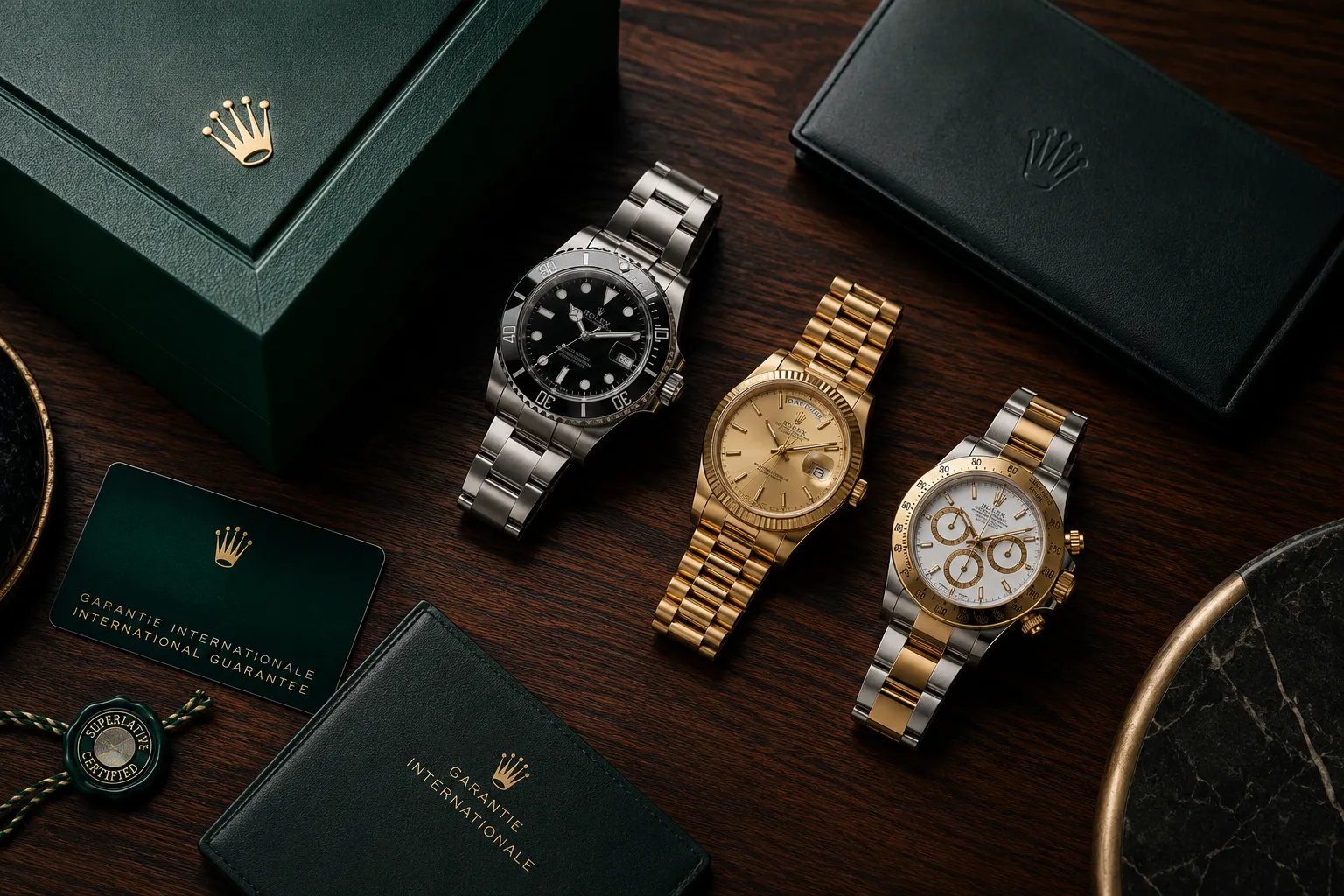
Step 2: Prioritize full-set completeness. A watch with its original box, papers (warranty card, chronometer certificate), hang tags, and original bracelet commands a significant premium over a watch sold without documentation. Always purchase Full Set Complete when possible.
Step 3: Verify authenticity rigorously. Purchase only from sources that provide Authenticity Guaranteed documentation. The pre-owned market contains sophisticated counterfeits, and authentication requires expertise. MioJewelry’s Luxury Watch Experts authenticate every timepiece before it enters the inventory.
Step 4: Assess condition honestly. Unpolished cases retain more collector value than polished examples. Original dials without refinishing, original hands, and undamaged crystals all support higher resale prices. A watch in excellent unpolished condition is worth materially more than the same reference in polished condition.
Step 5: Understand the reference number. Not every watch from a prestigious brand holds value equally. The Rolex Datejust is a beautiful watch but does not appreciate the way a Submariner or Daytona does. Reference-level knowledge is essential.
Step 6: Buy from a trusted source. Whether purchasing new or pre-owned, work with established dealers who offer Fully Insured Overnight Shipping, transparent provenance documentation, and White-Glove Service. MioJewelry is Trusted Worldwide for exactly this reason.
What Condition Do Vintage Watches Need to Hold Value
Condition is the single most consequential variable in vintage watch valuation. Two identical references can differ by 50 percent or more in value based on condition alone.
Key condition factors:
- Case sharpness: Unpolished cases with original brushed and polished surfaces intact command the highest premiums. Polishing removes metal and softens the crisp edges that define a watch’s original character.
- Dial originality: Original dials in good condition, even with age-appropriate patina, are far more valuable than replaced or refinished dials. “Tropical” dials (those that developed a brown patina through natural aging) are particularly prized.
- Movement condition: A serviced movement running accurately is essential, but over-serviced movements with replaced parts reduce collector value.
- Crystal: Original acrylic or sapphire crystals without deep scratches are preferred. Replaced crystals reduce value modestly but are acceptable if disclosed.
- Bracelet: Original bracelets with matching serial numbers to the case add significant value. Replacement bracelets, even correct period examples, reduce the premium.
A vintage watch in exceptional original condition with box and papers from a respected source is a fundamentally different asset from the same reference in polished condition without documentation.
Common Mistakes People Make Buying Investment Watches
Even experienced buyers make errors that cost them significantly at resale. The most common mistakes include:
Buying without authentication. The pre-owned luxury watch market contains sophisticated fakes. Never purchase a significant timepiece without professional authentication from a source with documented expertise.
Overpaying at grey-market premiums. Buying a Rolex Submariner at a 50 percent premium over retail to avoid the waiting list means starting with a built-in loss. Patience and relationships with authorized dealers produce better outcomes.
Ignoring the reference number. Brand prestige alone does not guarantee value retention. A Rolex Lady-Datejust and a Rolex Daytona carry the same brand name but very different investment profiles.
Neglecting completeness. Buying a watch without its original box and papers to save money is a false economy. The documentation gap costs more at resale than it saved at purchase.
Polishing the case. Well-intentioned maintenance that involves polishing the case destroys collector value. Wear marks on an unpolished case are a feature, not a flaw, to serious buyers.
Buying limited editions at inflated premiums. Not all limited editions appreciate. Some are produced in quantities large enough to satisfy demand, and their “limited” status does not translate to scarcity in the secondary market.
Where to Sell Luxury Watches for the Best Price
The best channel for selling a luxury watch depends on the reference, condition, and how quickly the seller needs to transact.
Specialist luxury watch dealers offer the most convenient experience with Immediate Availability of payment and no seller fees. The trade-off is a modest discount to retail value in exchange for speed and certainty. MioJewelry’s Watch Consignment Services and Sell Your Watch program provide free quotes within 24 hours, with competitive offers and a transparent process.
Auction houses (Phillips, Christie’s, Sotheby’s) achieve the highest prices for rare, vintage, and highly collectible references but charge seller’s commissions of 10 to 15 percent and require time to catalog and sell.
Peer-to-peer platforms (Chrono24, WatchBox) allow sellers to reach collectors directly but require the seller to handle authentication questions, shipping logistics, and buyer due diligence.
For most sellers, working with an established specialist dealer provides the best combination of fair value, speed, and security, particularly for investment-grade references where authentication credibility matters to the buyer.
Limited Edition Watches That Hold Value Best
Limited editions hold value best when the limitation is genuine, meaning production is constrained by materials, movement complexity, or brand decision rather than marketing. The references that have performed best include:
- Rolex Daytona “Rainbow” references in precious metals with gem-set bezels, production is genuinely limited by the time required to match stones.
- Patek Philippe Annual Calendar and Perpetual Calendar references, complex movements constrain production naturally.
- Audemars Piguet Royal Oak “Concept” series, ultra-complex movements in limited runs of 50 to 150 pieces.
- Omega Speedmaster Apollo mission anniversary editions, historical significance drives sustained collector demand.
- Cartier “Crash” and “Cloche” references, genuinely unusual case forms produced in small numbers.
The key distinction: a watch labeled “limited edition” with 5,000 pieces produced is not scarce. A watch produced in 150 pieces with a complex movement and precious metal case is a fundamentally different proposition.
Frequently Asked Questions
Which single watch has the best track record for never losing value? The Rolex Daytona in steel has the most documented track record of consistent appreciation, with secondary market premiums of 67 to 113 percent above retail recorded for the 116500LN reference. The Patek Philippe Nautilus 5711 has shown more dramatic percentage gains but with a smaller, more specialized buyer pool.
Does a Rolex watch lose value the moment you buy it? Most Rolex references do not lose value at purchase the way a car does. Certain references, particularly the Submariner, Daytona, and GMT-Master II, trade above retail on the secondary market, meaning a buyer who purchased at retail could sell immediately at a profit in strong market conditions.
What is the minimum budget for an investment-grade luxury watch? Entry-level investment-grade timepieces, Tudor Black Bay 58, Rolex Datejust in steel, begin around $5,000 to $8,000. The strongest appreciating references (Rolex Daytona, Patek Philippe Nautilus) require $15,000 to $50,000 or more. Serious investment-grade collecting typically begins at $10,000 and above.
Is box and papers really that important for resale? Yes. A Rolex Submariner with full set (box, papers, original bracelet) commands a premium of 10 to 20 percent over the same reference without documentation, depending on market conditions. For vintage references, the premium can be substantially higher.
How often should an investment watch be serviced? Rolex recommends service approximately every 10 years for modern references. For investment purposes, service only when necessary, over-servicing, particularly if it involves case polishing, reduces collector value.
Are quartz luxury watches a good investment? Generally, no. The investment case for luxury watches rests primarily on mechanical movements. Quartz luxury watches, with limited exceptions (certain vintage Patek Philippe and Rolex quartz references from the 1970s), do not appreciate in the same way.
What is the best way to verify a pre-owned luxury watch is authentic? Purchase from a dealer who provides written Authenticity Guaranteed documentation and has verifiable expertise. Physical examination of the movement, dial, case engravings, and serial numbers by a qualified watchmaker is the gold standard. MioJewelry authenticates every timepiece in its inventory before listing.
Do gold watches hold value better than steel? Gold watches carry intrinsic material value as a floor, which steel watches do not. However, steel sports watches from Rolex and Audemars Piguet have outperformed gold dress watches in percentage appreciation terms over the past decade, driven by collector demand rather than metal value.
Can a luxury watch be both worn and an investment? Yes, and this is one of the most compelling arguments for investment-grade timepieces. A Rolex Submariner or Patek Philippe Nautilus can be worn daily while retaining or growing in value, something no other investment asset class offers.
What happens to watch values in an economic downturn? The top tier, Rolex, Patek Philippe, Audemars Piguet, has historically shown resilience during economic downturns, though not immunity. During the 2022 market correction, secondary market prices for many references declined from peak levels before recovering. Watches are not risk-free assets, but the most prestigious references tend to hold floors better than mid-tier luxury goods.
Conclusion
The 10 luxury watches that have never lost value represent something rare in any asset class: objects that combine genuine utility, extraordinary craftsmanship, and documented financial resilience. Rolex, Patek Philippe, and Audemars Piguet have built their reputations over more than a century, and that heritage is reflected in secondary market prices that consistently meet or exceed retail.
For serious collectors and investors, the path forward is clear. Focus on proven references, the Daytona, Submariner, GMT-Master II, Nautilus, Aquanaut, Royal Oak, and Day-Date. Prioritize full-set completeness, unpolished condition, and authenticated provenance. Buy from sources that offer Authenticity Guaranteed documentation and White-Glove Service.
Actionable next steps:
- Browse MioJewelry’s complete luxury watch inventory to explore Certified Authentic, investment-grade references currently available with Immediate Availability.
- Use the Shop by Brand directory to compare references across Rolex, Patek Philippe, Audemars Piguet, and other prestige houses.
- If selling, request a free 24-hour quote to understand the current market value of a timepiece in your collection.
- For rare references not in current inventory, submit a Special Request, MioJewelry’s sourcing network reaches inventory that never appears in public listings.
Every investment-grade timepiece in MioJewelry’s Exclusive Collection ships with full authentication documentation and Fully Insured Overnight Shipping. Prestige and Performance, delivered with the trust that serious collectors demand.