

Care & Authenticity
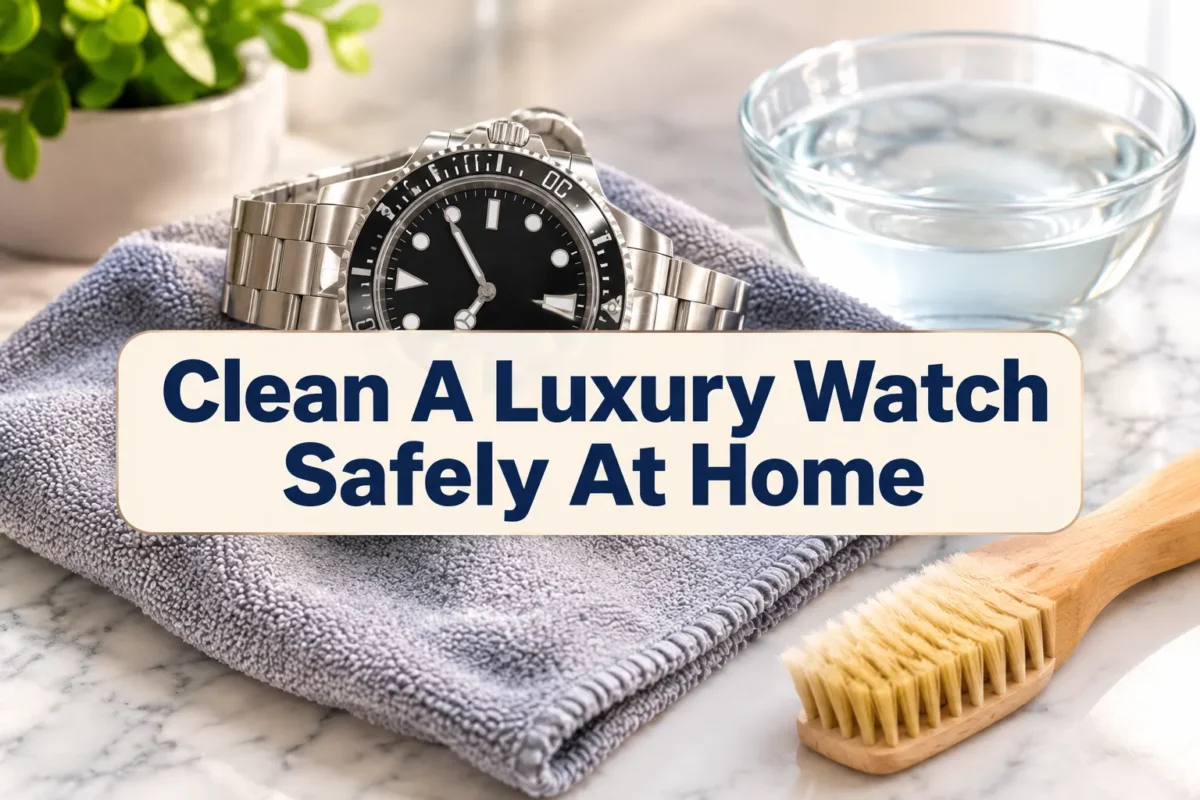
How to Clean a Luxury Watch Safely at Home
Nov
Last updated: November 19, 2026
Quick Answer
How to clean a luxury watch safely at home comes down to three rules: use lukewarm water only on watches rated water-resistant, never soak leather straps, and skip ultrasonic cleaners and harsh chemicals entirely. A soft-bristle brush, mild soap, and a microfiber cloth handle most routine upkeep. Anything involving the case back, movement, or a non-water-resistant piece belongs with a certified watchmaker, not a kitchen sink.
Key Takeaways
- Water-resistant steel and gold watches with screw-down crowns can be rinsed under lukewarm tap water, provided the crown is fully engaged.
- Non-water-resistant and high-complication pieces (minute repeaters, perpetual calendars, open-worked movements) should only be wiped with a dry microfiber cloth.
- Leather straps should never be soaked. Wipe gently and let them air dry away from direct heat.
- Ultrasonic cleaners are a professional tool, not a safe home device for valuable timepieces.
- Avoid ammonia-based cleaners, abrasive polishes, and paper towels, all of which can damage finishes or scratch crystals.
- Clean a daily-wear luxury watch every one to two weeks; clean a rarely worn piece before and after storage.
- Never open the case back yourself. Internal dust, moisture, or lint intrusion is one of the most common causes of unnecessary service costs.
- When in doubt about a model’s water resistance rating or case material, consult the manufacturer’s current digital manual before applying any liquid.
Investment-grade timepieces deserve the same discretion you would expect from a trusted dealer. A quarter of all watch service requests brought to workshops involve damage that began with a well-meaning but incorrect at-home cleaning attempt. That single fact should reframe how collectors think about a simple wipe-down. Learning how to clean a luxury watch safely at home is not a cosmetic chore; it is part of preserving the condition, performance, and resale value of an asset that was never meant to be treated casually.
This guide draws on current manufacturer guidance, including Rolex’s published care instructions and Patek Philippe’s position on water exposure, to lay out exactly what is safe, what is not, and when a cleaning job stops being a home task and becomes a workshop matter.
What’s the Difference Between Cleaning a Luxury Watch and a Regular Watch
A luxury watch demands more restraint than a mass-market quartz piece because its case materials, gaskets, and finishing are far less forgiving of improper handling. Fashion watches are often built for disposability. Investment-grade timepieces are built to be serviced and preserved for decades, which changes the entire cleaning calculus.
Key distinctions worth understanding:
- Gasket sensitivity. Luxury mechanical watches rely on rubber or nylon gaskets around the crown and case back to maintain water resistance. Repeated exposure to heat, chemicals, or pressure can degrade these seals faster than on a sealed quartz unit.
- Finishing matters. Polished bevels, brushed lugs, and fluted bezels on pieces from brands such as Rolex, Patek Philippe, or Cartier can show micro-scratches from the wrong cloth or brush, directly affecting resale value.
- Complications add risk. Chronographs, moonphases, and perpetual calendars often have pushers and openings that are more vulnerable to moisture intrusion than a simple three-hand watch.
Choose a gentler cleaning approach any time the watch carries a complication, an exotic strap, or a vintage case, since these are the pieces most likely to suffer irreversible damage from an aggressive routine.
Can You Use Water to Clean a Luxury Watch Safely
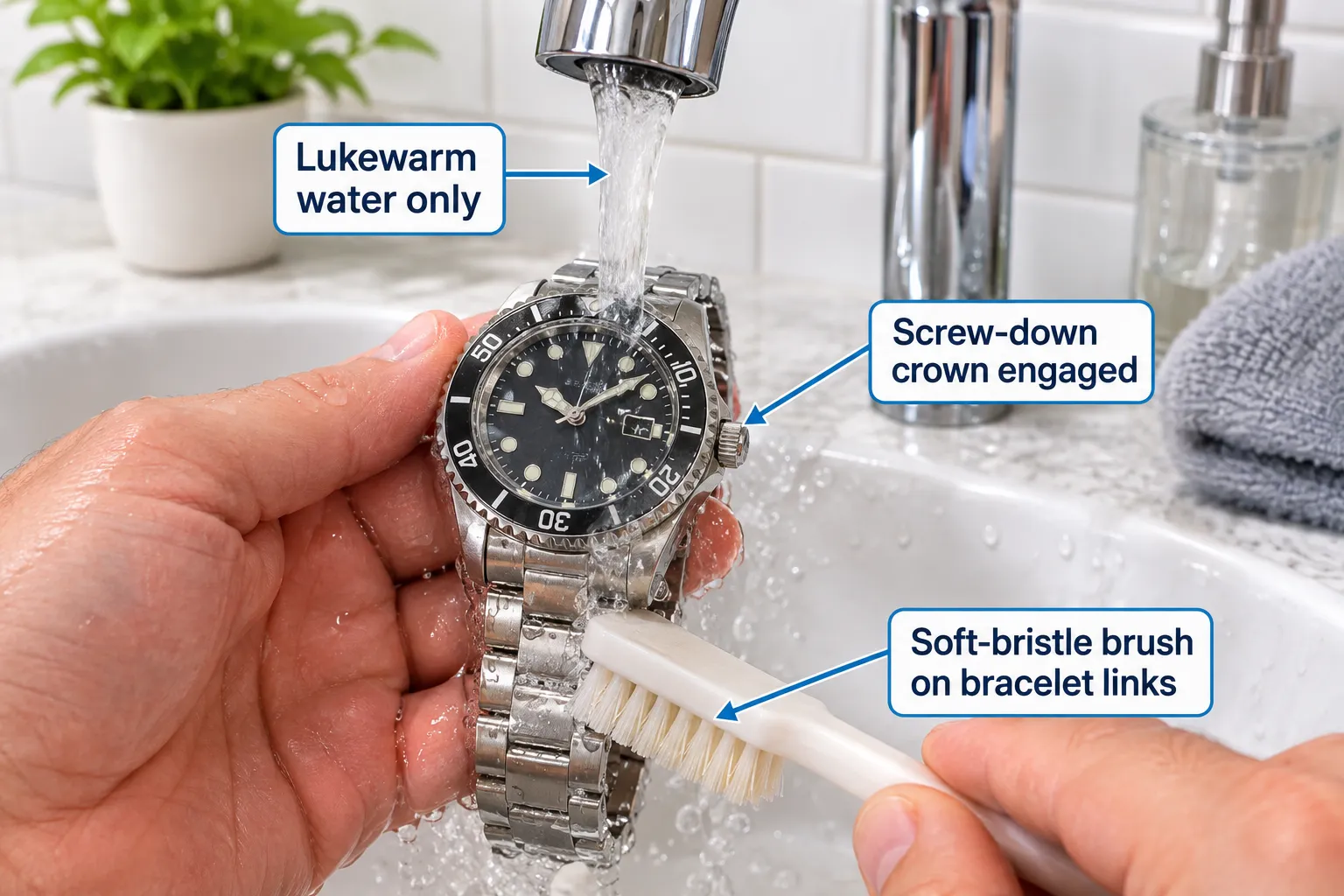
Yes, but only if the watch is confirmed water-resistant and the crown is fully screwed down or pushed in. Rolex’s own guidance confirms that modern Oyster cases, when properly sealed, can be cleaned under a gentle stream of lukewarm water. Patek Philippe offers similar direction for its water-resistant references, noting that a rinse after exposure to salt water, chlorine, or soap residue is appropriate for everyday wear.
What this means in practice:
- Confirm the water resistance rating stamped on the case back or listed in the model’s documentation.
- Engage the crown fully before any contact with water.
- Use lukewarm, never hot or cold, water, since sudden temperature shifts can stress gaskets.
- Avoid high-pressure streams; a gentle tap flow is sufficient.
Common mistake: owners assume a watch is water-resistant because it has a metal bracelet. Water resistance is determined by the case and gasket system, not the bracelet material. A vintage reference with an unscrewed crown, even in a steel case, should never touch water. If there is any doubt about the rating, treat the watch as non-water-resistant and rely on a dry cloth only.
Best Tools and Materials to Clean a Luxury Watch at Home
The right toolkit for cleaning an investment-grade timepiece is short, inexpensive, and gentle by design. Overcomplicating the process with specialty gadgets is where most damage begins.
Safe materials to keep on hand:
Avoid paper towels, household glass cleaners, and cotton balls, since all three can leave fibers or chemical residue on the case and crystal. Choose the soap-and-water method if the watch is water-resistant and visibly dirty around the bracelet links. Choose a dry microfiber wipe if the watch is dressy, vintage, or uncertain in rating.
Luxury Watch Cleaning at Home vs Professional Service Cost
At-home cleaning handles surface dirt and smudges for free, while professional servicing addresses lubrication, gasket replacement, and internal dust that no home routine can touch. The two are not interchangeable, and treating a home wipe-down as a substitute for periodic servicing is a mistake many owners make.
A practical breakdown:
- At-home cleaning: No cost beyond basic supplies. Removes surface grime, fingerprints, and residue from the case, bracelet, and crystal exterior.
- Professional deep cleaning and service: Involves disassembly, ultrasonic cleaning of individual components in a controlled workshop setting, gasket replacement, lubrication, and timing regulation. This is typically recommended by manufacturers on a multi-year cycle, often every three to five years depending on the model and usage.
Decision rule: if the watch looks clean but has not been serviced in several years, a home cleaning will not reveal hidden wear inside the movement. Schedule a workshop evaluation on a regular interval regardless of how the case looks externally. For collectors managing several pieces, our Luxury Watch Experts resource outlines movement types and maintenance basics worth understanding before any service decision.
How Often Should You Clean Your Luxury Watch
A daily-wear luxury watch benefits from a light cleaning every one to two weeks, while a watch kept mostly in storage should be cleaned before and after any extended period of non-use. Frequency depends far more on exposure than on the brand or price point.
Guidelines by wear pattern:
- Daily wear, active lifestyle: Wipe down nightly, rinse weekly if water-resistant and exposed to sweat, sunscreen, or salt water.
- Office or dress wear: A microfiber wipe every few days is usually sufficient.
- Rotation or safe storage: Clean before placing in storage and again before the next wear to remove any residue from storage materials.
Edge case: watches worn during exercise or swimming accumulate salt, sunscreen, and sweat residue that can degrade gaskets over time if left unaddressed. These pieces need more frequent rinsing than a watch that rarely leaves a climate-controlled office.
What Are Common Mistakes People Make When Cleaning Watches
The most frequent and costly mistake is applying water or cleaning solution to a watch without confirming its water resistance status first. Several other errors show up consistently across collector forums and workshop intake reports.
Common missteps to avoid:
- Using ammonia-based glass cleaner on the crystal, which can degrade anti-reflective coatings.
- Scrubbing the dial directly with any brush, risking scratches on lacquered or enamel surfaces.
- Leaving the crown unscrewed or partially engaged during a rinse.
- Using excessive force on bracelet links, which can loosen pins or scratch polished surfaces.
- Storing a damp watch immediately in a closed box, trapping moisture against the case.
Mistake to flag clearly: many owners attempt to “deep clean” a bracelet by soaking the entire watch in a bowl of soapy water for an extended period. Even water-resistant models are not designed for prolonged submersion during cleaning. A quick rinse, not a soak, is the safe standard.
How to Clean a Luxury Watch With a Leather Strap
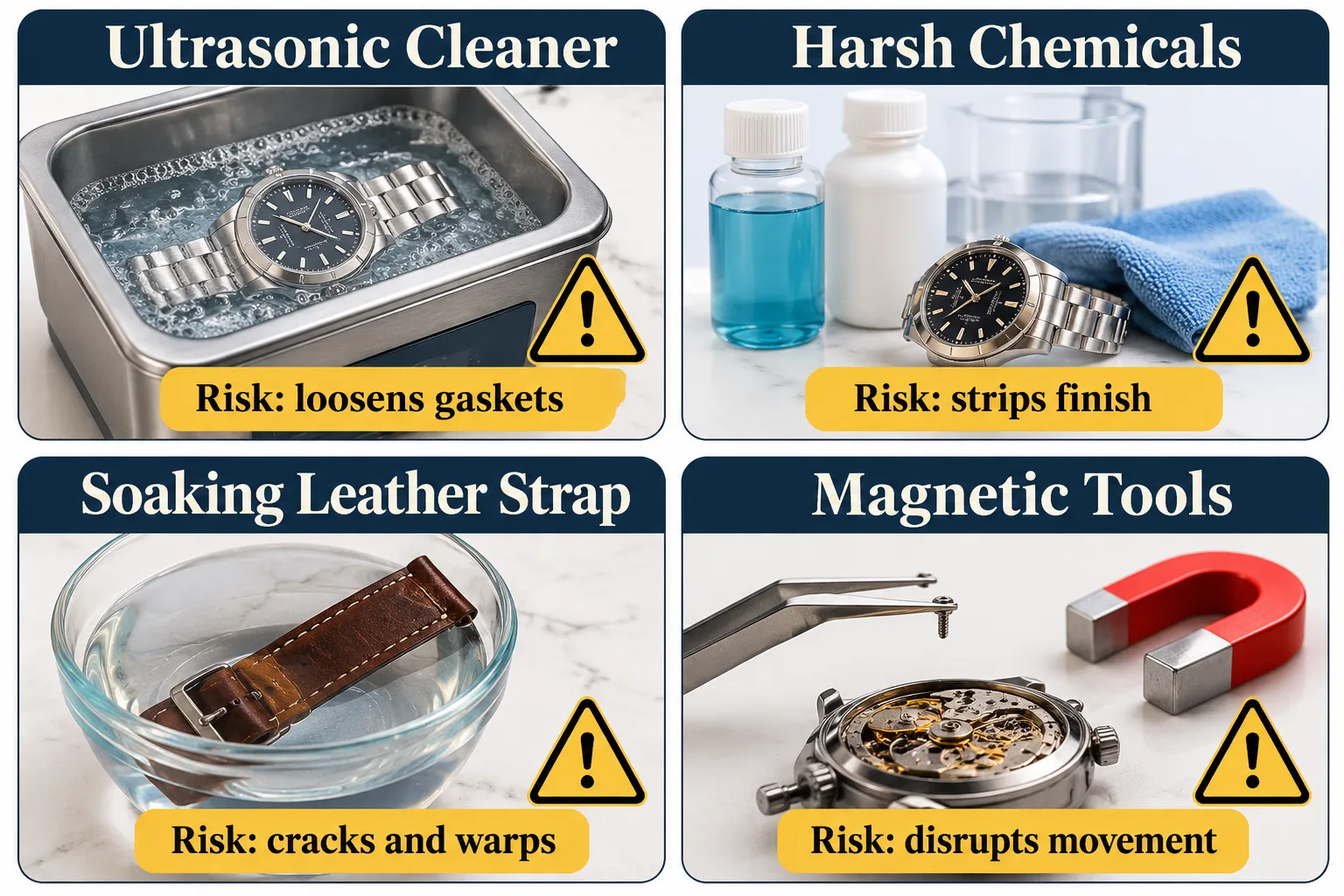
Leather straps should be wiped, never soaked, and kept away from direct water, soap, and heat sources entirely. Leather is porous and absorbs moisture, which leads to cracking, discoloration, and an unpleasant odor over time.
Safe steps for leather care:
- Remove the watch from the wrist before cleaning.
- Use a barely damp microfiber cloth to wipe the surface, avoiding the edges where stitching meets leather.
- Dry immediately with a separate dry cloth.
- Let the strap air dry fully away from radiators, sunlight, or hair dryers before wearing again.
- Rotate straps if the watch is worn daily, allowing leather to rest and recover its shape between wears.
Choose a leather strap cleaner specifically formulated for fine leather goods if the strap shows heavy staining, but test on an inconspicuous section first. Our Panthere de Cartier collection, along with many dress watches fitted with leather, is best maintained with this gentle, dry-leaning approach rather than any liquid-based method.
Should You Clean the Inside of a Luxury Watch Yourself
No. Opening the case back to clean the movement, dial, or inner case components is a task reserved exclusively for a certified watchmaker with the proper tools and a dust-free environment. Attempting this at home almost always introduces more contamination than it removes.
Reasons this matters:
- Case backs on screw-down models require specific tools and torque to reseal properly without damaging the gasket.
- Dust, lint, or moisture introduced during a home attempt can settle on the movement and cause long-term wear.
- Breaking a factory seal on a watch still covered by warranty can void that coverage entirely.
If a watch is still under factory warranty, any internal cleaning should go through an authorized service center to preserve that protection. This is one of the clearest lines between acceptable home maintenance and work that belongs exclusively to a professional.
What Happens if You Use the Wrong Cleaner on a Luxury Watch
Using the wrong cleaner can strip finishes, degrade gaskets, cloud crystals, and in some cases void a manufacturer’s warranty coverage. The damage is often not visible immediately, which makes the mistake easy to repeat before it is caught.
Specific risks by product type:
- Ammonia-based glass cleaners: Can dull anti-reflective crystal coatings and discolor gold-tone finishes over repeated use.
- Alcohol-based wipes: Can dry out and crack leather straps and rubber gaskets.
- Abrasive polishing compounds: Remove microscopic amounts of metal with each use, altering the original case geometry over time, which matters enormously for collectors concerned with originality and investment value.
- Dish soap with degreasers: Can leave residue that attracts more dust than it removes.
Example: a collector who regularly used a household glass cleaner on a vintage chronograph crystal noticed a faint haze developing after several months. The coating had degraded gradually, a change that was not reversible without a full crystal replacement.
When Should You Take Your Watch to a Jeweler Instead of Cleaning It at Home
Take the watch to a jeweler or authorized service center any time water resistance is uncertain, moisture appears inside the case, the watch has not been serviced in several years, or any component feels loose. These are signals that go beyond what a home cleaning routine can safely address.
Clear signs it is time for professional attention:
- Fogging or condensation visible under the crystal.
- A crown that feels gritty, loose, or difficult to screw down.
- Visible corrosion or discoloration on the case back.
- The watch has not had a movement service in the manufacturer’s recommended interval.
- Any complication (chronograph pusher, date corrector) feels stiff or unresponsive.
Decision rule: if fixing the issue would require opening the case, it belongs with a professional. Collectors working with serious investment pieces, from a Patek Philippe Nautilus to a Rolex Datejust, should treat this threshold seriously, since condition directly affects long-term value.
How to Clean the Crystal and Glass on a Luxury Watch Without Scratching It
Clean the crystal with a dry or barely damp microfiber cloth using light, circular motions, and never apply direct pressure with anything abrasive. Sapphire crystals resist scratching better than acrylic, but both can be damaged by the wrong material or technique.
Safe crystal cleaning steps:
- Breathe lightly on the crystal to add light moisture, similar to cleaning eyeglasses.
- Wipe gently with a clean microfiber cloth in a circular motion.
- For stubborn smudges, use a drop of lukewarm soapy water on the cloth, not directly on the crystal.
- Dry immediately with a separate dry section of the cloth.
Avoid paper towels and tissues entirely, since both contain wood fibers that can create micro-scratches over repeated use, particularly on softer acrylic crystals found in some vintage pieces. A piece like the Jaeger LeCoultre Master Ultra Thin Moon, with its domed sapphire crystal, holds up well to this method when done gently and consistently.
Can You Damage Your Watch by Cleaning It the Wrong Way
Yes, improper cleaning is one of the most common and preventable causes of damage to otherwise well-maintained luxury watches. The risk is not limited to obvious scratches; it extends to compromised gaskets, degraded finishes, and moisture intrusion that may not surface until months later.
Risk factors that compound damage:
- Shocks: Dropping a watch during cleaning, even from a short height onto a counter, can misalign delicate movement components.
- Heat: Drying a watch near a stovetop, hair dryer, or direct sunlight can stress gaskets and warp leather straps.
- Magnetism: Placing a watch near speakers, phone cases with magnetic closures, or certain cleaning tools can magnetize the movement, affecting timekeeping accuracy.
Edge case worth noting: owners sometimes use a hair dryer to speed-dry a rinsed watch. The heat generated is enough to accelerate gasket aging over repeated use, even on a brief low setting. Air drying at room temperature is always the safer choice.
What Products Should You Avoid When Cleaning Luxury Watches
Avoid ammonia-based cleaners, alcohol wipes, abrasive polishes, bleach, and any household degreasing agent when cleaning a luxury watch. None of these products were designed with watch gaskets, coatings, or precious metal finishes in mind.
Products to keep away from any timepiece:
- Glass and surface cleaners containing ammonia.
- Jewelry dip solutions not specifically rated for watch cases.
- Metal polish or chrome cleaner intended for automotive use.
- Baby wipes or alcohol-based sanitizing wipes.
- Any DIY vinegar or baking soda paste circulating online as a “natural” cleaner.
Brands including Rolex and Patek Philippe are explicit in their current guidance: polishing, chemical treatment, and anything beyond soap, water, and a soft cloth should be left to an authorized service center. This stance exists because even well-intentioned home chemistry can alter a case’s original finish, which matters directly for resale and investment value.
Is It Safe to Use Ultrasonic Cleaners on Expensive Watches at Home
No, home ultrasonic cleaners are not recommended for luxury watches, since the vibration and cleaning solutions used can loosen gaskets, dislodge gemstones, and stress delicate components not designed for that kind of agitation. Ultrasonic cleaning is a legitimate professional technique, but only when performed by a trained watchmaker using controlled equipment and watch-specific solutions.
Why the home version carries real risk:
- Consumer ultrasonic cleaners are typically built for jewelry without moving mechanical parts, not for watches with gaskets and complications.
- Gemstone settings on pieces like a diamond-set Datejust can loosen under sustained vibration.
- Water resistance ratings do not account for the kind of agitation ultrasonic cleaning produces.
Choose professional ultrasonic service only when the watch is already scheduled for a full movement service, where the case can be properly disassembled first. For standalone home maintenance, stick to the manual rinse-and-wipe method described earlier in this guide.
Frequently Asked Questions
Can I clean my Rolex at home with soap and water?
Yes, if the crown is fully screwed down and the case is confirmed water-resistant. Use lukewarm water and a mild, fragrance-free soap, then dry thoroughly with a microfiber cloth.
How do I know if my watch is water-resistant enough to rinse?
Check the case back markings or the manufacturer’s digital manual for a water resistance rating. If there is any doubt, treat the watch as non-water-resistant and use a dry cloth only.
Is it safe to use a toothbrush on a luxury watch bracelet?
A soft-bristle brush, such as a baby toothbrush, is safe for cleaning between bracelet links on water-resistant models. Avoid using it on the dial or crystal.
How often should a luxury watch be professionally serviced?
Most manufacturers recommend a full movement service every three to five years, depending on the model and how frequently it is worn.
Can cleaning my watch at home void the warranty?
Surface cleaning with soap and water generally does not void a warranty. Opening the case back or attempting internal cleaning can void coverage, so that work should always go through an authorized service center.
What should I do if water gets inside my watch while cleaning it?
Stop immediately and take the watch to a jeweler or authorized service center as soon as possible. Moisture left inside the case can cause corrosion and movement damage if not addressed quickly.
Are microfiber cloths safe for all luxury watch materials?
Yes, microfiber is safe for metal cases, crystals, and most bracelet types. It should not be used wet on leather straps.
Can I use rubbing alcohol to disinfect my watch?
No, alcohol can dry out gaskets and leather straps and should be avoided. A mild soap and water solution is a safer alternative for water-resistant cases.
Conclusion
Cleaning a luxury watch safely at home is a matter of knowing your limits, not your ambition. A lukewarm rinse, a soft brush, and a microfiber cloth handle the vast majority of routine care for water-resistant pieces. Leather straps call for a gentler, dry-leaning touch. And anything involving the case back, movement, or an uncertain water resistance rating should move directly to a certified watchmaker rather than a home attempt.
Collectors who treat routine cleaning with the same discipline applied to buying and storing their pieces protect both the daily wearability and the long-term investment value of their collection. If a piece in your collection shows signs it needs more than a wipe-down, or if you are considering adding to or refining your holdings, our team offers white-glove service for owners navigating condition questions, consignment, or their next acquisition from our exclusive collection of certified authentic, investment-grade timepieces.