

Trends & Culture
Skeleton Watches: Artful Horology or Everyday Distraction?
Nov
Quick Answer
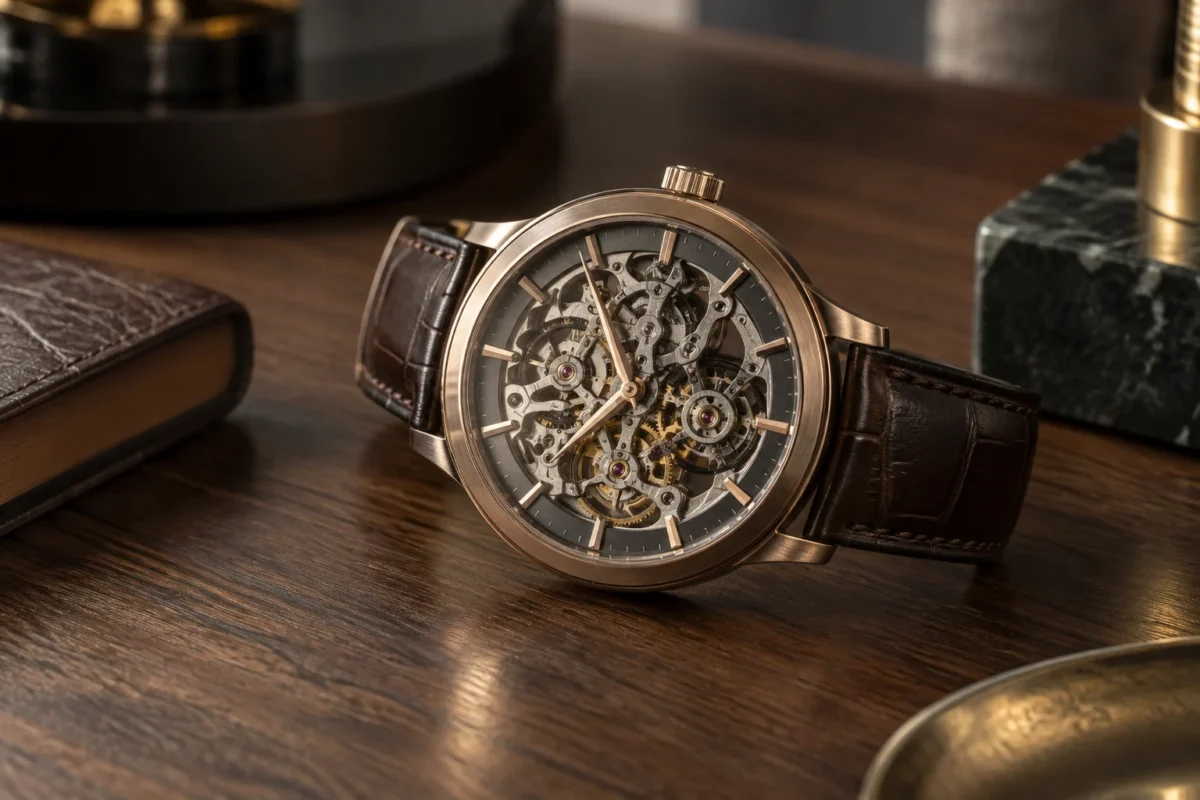
Skeleton watches are exactly what they look like: mechanical watches where much of the dial and movement are cut away so you can see the gears, springs, and levers at work. When they’re done well, they’re wearable mechanical art. When they’re done badly, they’re busy, hard to read, and tiring on the wrist.
As everyday watches, skeleton pieces can be both addictive and distracting, depending on your taste, your lifestyle, and how subtle the design is. The key is matching the right skeleton style to how you actually live and dress, instead of just buying the wildest piece you see on Instagram.
Key Takeaways
- Skeleton watches remove most of the dial and sometimes material from the movement so you can see the mechanics inside.
- They range from super clean and legible to wild, ultra-busy designs you’ll either love or find exhausting.
- Brands like Audemars Piguet, Cartier, Hublot, Richard Mille, TAG Heuer, and Tissot all approach skeletonization in very different ways.
- Readability, comfort, and finishing quality matter more on skeleton pieces than on many solid-dial watches.
- They can be everyday watches if the design is restrained and the dial is still easy to read.
- Highly avant-garde skeleton watches lean more toward art objects and occasional wear.
- Service and durability deserve real thought, because skeleton movements often have more delicate, open-worked parts.
- Try one on in different lighting and outfits before buying; photos rarely tell the whole story with skeletons.
If you’ve ever caught yourself staring at the balance wheel of a watch instead of answering someone’s question, skeleton watches might be your personal rabbit hole. They take that quiet mechanical charm and turn it into the whole visual point of the watch. You’re not just wearing time; you’re wearing the machine.
But that same openness can be too much. Some people find skeleton pieces impossible to read at a glance or too flashy for the office. Others try to wear a wild, neon-tinted skeleton sports watch with everything and then wonder why it never feels quite right with a suit.
This guide is here to help you decide where you fall. We’ll talk through what skeleton watches actually are, how different brands interpret them, when they work beautifully in daily life—and when they’re better as occasional showpieces. We’ll also look at some standout examples from Audemars Piguet, Cartier, Hublot, Richard Mille, TAG Heuer, and Tissot, and finish with honest buying advice so you can decide if a skeleton belongs in your rotation at all.
What Is a Skeleton Watch, Really?
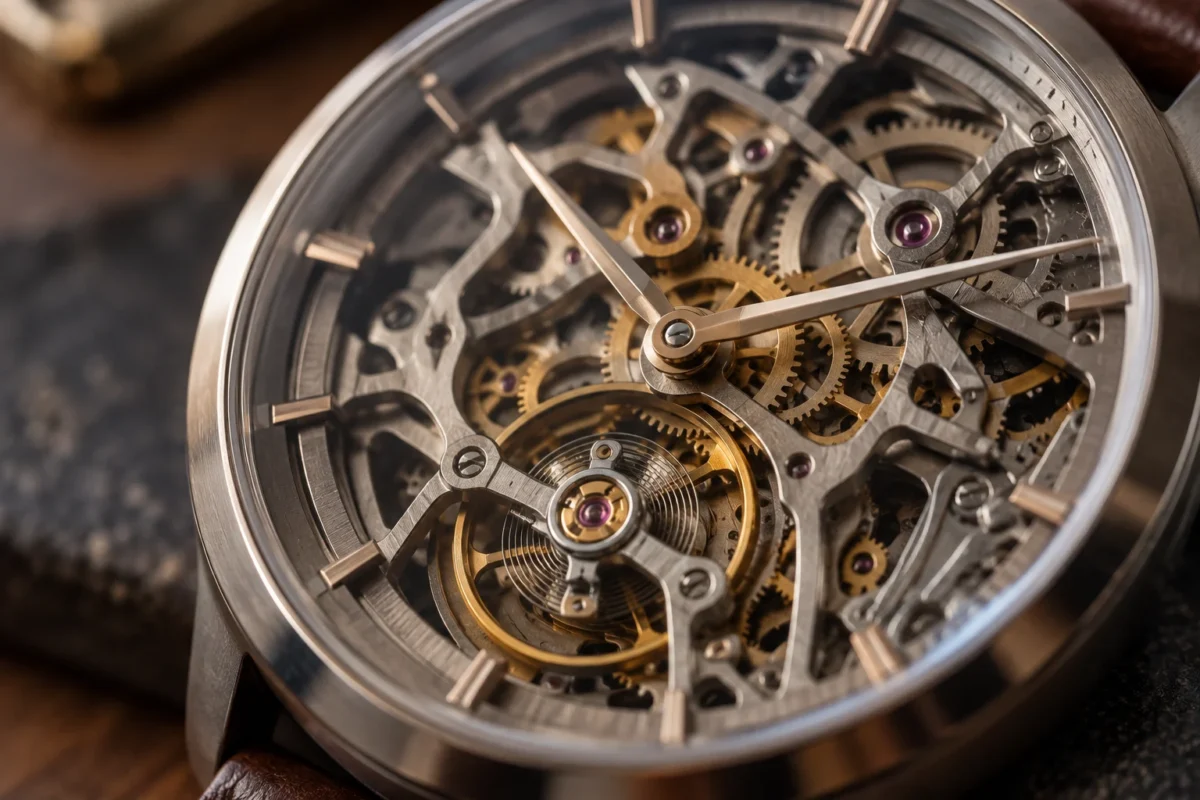
At its simplest, a skeleton watch is a mechanical watch where the dial and movement are partially or heavily cut away so you can see the inner workings. Traditionally, watchmakers would take a normal movement, remove every non-essential sliver of metal, then bevel, polish, and decorate what was left. The idea wasn’t just to show the movement, but to turn the structure itself into visual art.
These days, you’ll see a few different approaches:
- Open-heart: Just a small cut-out on the dial showing the balance wheel. Technically not full skeletonization, more a teaser.
- Partial skeleton: Big openings on the dial and/or caseback that show a good chunk of the movement but keep solid areas for legibility.
- Full skeleton: Little or no traditional dial, open bridges, and lots of light passing straight through the watch.
True, high-end skeletonization is hard. You’re removing material from parts that already have to survive daily shock and still keep good time. That’s why the best skeleton watches don’t just look cool—they’re examples of serious engineering and finishing skill.
Are Skeleton Watches Artful Horology or Everyday Distraction?
The honest answer: they can be both, sometimes in the same watch.
Why they feel like art: When you see the barrels, gear train, and balance spinning in real time, you’re seeing 200–300 tiny parts doing a job your phone does silently and instantly. There’s an emotional hit in that contrast. High-end skeletons add hand-finished bevels, black-polished steel, and intricate engraving that you simply don’t notice on a closed movement.
Why they can become a distraction: Some skeleton watches are busy enough that reading the time turns into a mini scavenger hunt. Thin hands over a maze of gears can disappear in certain lighting. And in a professional setting, a highly avant-garde skeleton piece can steal attention in a way you may not actually want.
So the real question isn’t “are skeleton watches good or bad?” It’s “how loud do you want your watch to be, and in what situations?” Once you answer that, it’s a lot easier to sort artful daily pieces from show-off toys you’ll only wear on weekends.
How Different Brands Do Skeleton Watches
Let’s look at how some of the brands you’re likely considering approach skeletonization. Each has a distinct personality, and it matters.
Audemars Piguet: Architectural and Technical
Audemars Piguet is one of the houses that made modern skeleton sports watches a thing. Skeleton versions of the Royal Oak and Royal Oak Offshore lean heavily on sharp, architectural bridges and often mix brushed, sandblasted, and polished surfaces. They tend to feel like serious pieces of engineering first, design objects second.
You’ll also see skeletonization used in the Royal Oak Concept line, where tourbillons, power-reserve indicators, and chronographs are arranged in dramatic, asymmetrical layouts. These are watches you notice across a room—and they’re not exactly shy about it.
Cartier: Elegant, Graphic, and Surprisingly Wearable
Cartier takes a more graphic approach. Think Roman numerals turned into bridges, or the entire “railway” minute track becoming the structural skeleton. Pieces like the Tank and Santos skeletons read almost like jewelry first, watch second—which is very on-brand for Cartier.
If you want to go deeper on one reference, you can check our in-depth review of the Cartier Tank Américaine Skeleton WHTA0040, which walks through how Cartier balances legibility with that cut-out architecture.
Hublot: Maximalist, Bold, and Sporty
Hublot skeletons usually go big: large cases, multi-layer dials, bold indices, and often bright colors or unusual materials. There’s a lot of depth—literally—and the skeletonization is part of a 3D dial construction rather than just an open movement. On the wrist, they feel loud, fun, and unapologetically modern.
If you want your watch to be a conversation starter at every dinner, this style will appeal to you. If you work in a conservative environment, you might want something with a bit more restraint.
Richard Mille: High-Tech Machines on the Wrist
Richard Mille more or less lives in the skeleton space. Carbon or titanium cases, suspended movements, huge cut-outs, and bridges that look like they belong in a race car. The whole point is to show off advanced materials and shock resistance, not classic Geneva stripes.
They’re incredibly cool from a technical standpoint, but most references lean hard into the “art object” side of the scale. If your question is strictly about practical daily wear, this is probably not where you start—this is where you end up when you’re already deep into the hobby.
TAG Heuer: Sporty, High-Energy Skeletons
TAG Heuer has used skeleton-style dials heavily in its Carrera line. You’ll see big, angular bridges, framed subdials, and lots of depth. It’s sport-first design, aimed at people who like modern, active pieces with a bit of tech flavor.
These can be more readable than they look in photos because TAG often uses strong contrast on the hands and markers. But they’re still more energetic than discreet, classic dress watches.
Tissot: Accessible and Tasteful
Tissot is one of the brands that lets you experiment with skeleton watches without a five-figure commitment. Many of their models are partial skeletons or open-hearts, with large cut-outs to show the balance wheel and key bridges while still giving you a clear dial.
Are they finished to haute horlogerie levels? Of course not. But they’re a good way to learn whether you actually enjoy looking into a movement every day, or if you just liked the idea of it.
Skeleton Watches vs Traditional Dials: How Do They Wear?
To make sense of how skeleton watches feel on the wrist, it helps to compare them point by point with solid-dial pieces.
| Factor | Skeleton Watches | Traditional Dials |
|---|---|---|
| Legibility | Can range from decent to very poor, depending on contrast and design. | Generally better; your eyes have fewer distractions. |
| Visual Interest | Very high; constant motion and depth to look at. | Varies, but often calmer and more understated. |
| Formality | Often reads modern or flashy; classic dress skeletons exist but are rarer. | Can run from sporty to ultra-formal, easier to match to dress codes. |
| Versatility | More outfit-sensitive; some look out of place with very formal wear. | Usually more versatile and “background” friendly. |
| Durability Perception | Feels more delicate; you see the fine parts, which can make you baby it. | Feels tougher psychologically, even if specs are similar. |
Notice that none of this means you can’t daily a skeleton. It just means you should be honest about your lifestyle. If you’re constantly in dim conference rooms needing to check the time quickly, maximum legibility might matter more than getting hypnotized by your balance wheel.
When Skeleton Watches Work Beautifully in Daily Life
Let’s talk scenarios where a skeleton can be genuinely great as an everyday piece.
- Business casual environments: If your office style is chinos, knit polos, and unstructured blazers, a refined skeleton from Cartier or Audemars Piguet can add personality without screaming.
- Creative fields: Design, tech, media—here, a more avant-garde Hublot or Richard Mille-style look can fit right in. Your watch can be part of your personal signature.
- At home and on weekends: If you mostly want a watch you enjoy for yourself, not for anyone else’s expectations, a skeleton that’s slightly wild can be perfect. You’ll probably find yourself idly watching the escapement more often than you’d admit.
The trick is choosing something with reasonable contrast and hand size, and ideally trying it in low light. If you can still catch the time quickly on the couch at night, you’re probably safe for office lighting too.
When Skeleton Watches Become a Distraction
On the flip side, there are some very real ways skeletons can get in your way.
- Low-contrast layouts: Rhodium hands over a silvery movement, or black hands over a darkened skeleton, can become invisible at certain angles.
- Oversized cases with high drama: On small wrists or under tight cuffs, big skeleton sports watches can feel like they’re constantly catching and demanding attention.
- Formal events: A super-technical, aggressive skeleton chrono can look slightly out-of-sync with a very classic black-tie outfit, where a simple dress watch would just quietly work.
There’s also the mental side: you might simply find yourself watching the movement instead of being present. Some people love that contemplative, fidget-toy aspect; others start to feel like the watch is shouting over the rest of their wardrobe.
Standout Skeleton Watch Styles to Consider
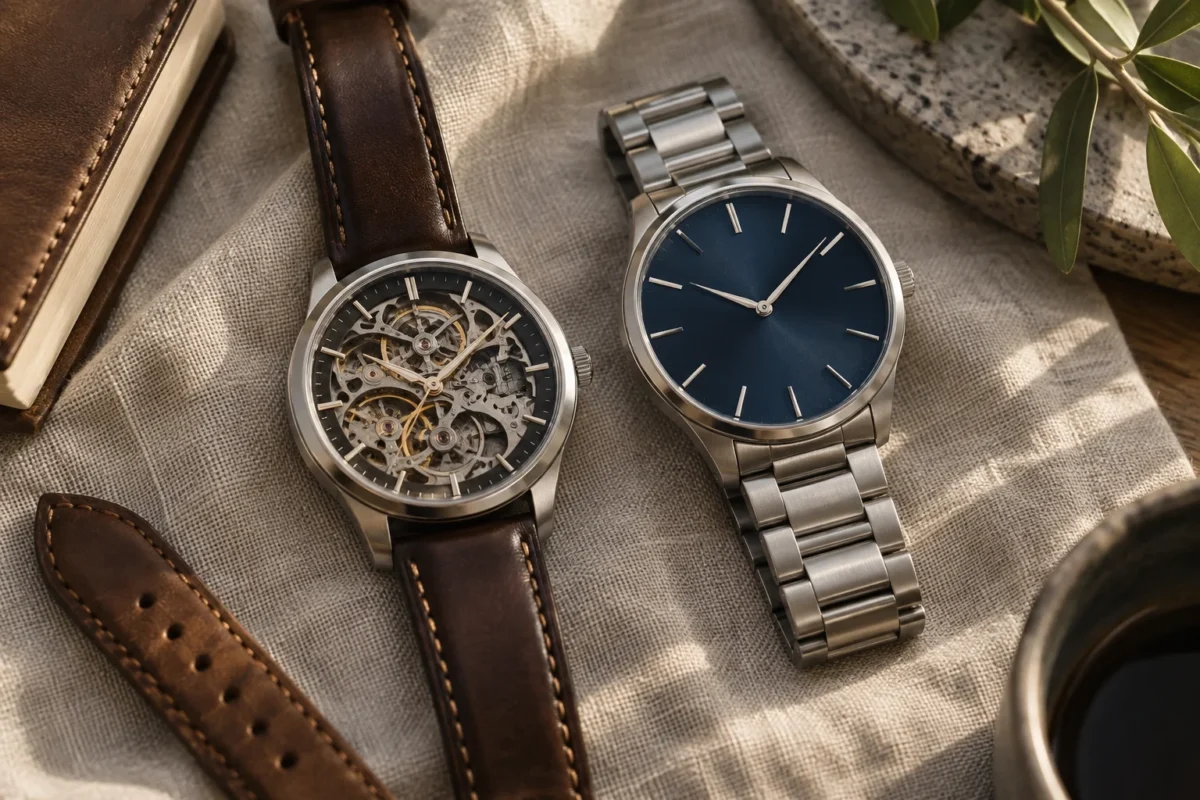
Let’s walk through a few archetypes you’ll see a lot, with examples from the brands you mentioned. These aren’t strict “you must buy this exact reference” recommendations, more templates for the kinds of skeleton watches that actually work on the wrist.
Audemars Piguet Royal Oak Openworked (various references)
Royal Oak skeletons tend to be the poster children for serious, architectural openworking. You get the familiar octagonal case and bracelet, but the dial side is dominated by open bridges and visible mainsprings. The movement finishing is typically very high, and the design stays more “technical” than wild.
In daily life, these straddle an interesting line: undeniably luxurious, but not cartoonish. They can be worn in business settings without feeling like you brought a spaceship to a budget meeting, especially in more muted metal and dial combinations.
Who it’s for: You want a serious high-end watch and you actually care about the mechanics; you’d rather have crisp architecture than flashy colors.
Cartier Santos and Tank Skeletons
Cartier’s skeleton Santos and Tank models use the numerals and minute track as bridges, so the movement support structure doubles as a graphic dial. That gives you a lot of visual impact while keeping the time fairly legible—your eyes can still latch onto the familiar Roman numerals and sword hands.
They also wear flatter and more refined than most sporty skeletons, which is nice if you’re slipping them under a cuff. For a deeper take on how a skeleton Cartier Tank actually behaves day to day, the Tank Américaine Skeleton WHTA0040 review is a good reality check.
Who it’s for: You like the idea of a dressier skeleton you can wear with tailoring, and you’d happily lean into Cartier’s jewelry-meets-watch vibe.
Hublot Big Bang & Classic Fusion Skeleton Styles
Hublot skeletons often pair large cases and integrated straps with openwork dials full of layered bridges, subdials, and bold hour markers. The result is high drama, especially in brighter materials or with colored accents. These are watches built for visibility and conversation.
They can be surprisingly comfortable because of the strap design and case ergonomics, but they’re rarely subtle. On the plus side, the big, lume-filled hands often make them easier to read at a glance than more delicate, traditional skeletons.
Who it’s for: You want your watch to be as extroverted as you are, and you live a lifestyle where that kind of statement feels natural, not forced.
Richard Mille-Style Technical Skeletons
Richard Mille has its own category: tonneau cases, suspended “floating” movements, and skeleton bridges that look like race car components. On the wrist, they feel more like wearable engineering prototypes than jewelry. They’re known for using exotic materials and shock-resistant constructions that you can see working through the open dial and caseback.
Most of these are visually busy and quite large, and they project serious wealth. They’re closer to a high-tech sculpture than a classic watch and tend to be worn on specific occasions rather than as one-watch solutions.
Who it’s for: You see watches as mechanical art and don’t need this to be your only or even primary daily piece.
TAG Heuer Carrera Skeleton Dials
Skeletonized Carreras sit in a nice middle zone: modern, sporty, and a bit aggressive, but more approachable in price than the brands above. You’ll usually see chronograph layouts with partially open dials and framed subregisters, so you get visual depth without fully giving up dial structure.
For everyday use, they’re good if you’re okay with a sporty, slightly technical aesthetic. Big hour markers and bright hands often keep legibility acceptable, even with all the dial cut-outs.
Who it’s for: You like motorsport or modern sports watches and want a skeleton that still feels like a daily driver.
Tissot Partial Skeletons and Open-Heart Pieces
Tissot’s skeleton-leaning models generally show the most interesting part of the movement—the balance and escapement—through a large window on the dial, sometimes with additional cut-outs. They give you the “I can see into the movement” hit without going full transparency overload. That also helps with water resistance and durability, since the overall movement remains more standard.
On the wrist, they often come across as tasteful and a bit playful rather than shouty. They’re especially appealing if you’re still experimenting with what you like in mechanical watches.
Who it’s for: You want to try skeleton aesthetics without committing major money, or you prefer a quieter, semi-open look.
Buying Criteria: How to Choose a Skeleton Watch That Won’t Annoy You
Here’s the checklist I’d walk through before buying any skeleton watch, from Tissot up to high complications.
1. Legibility in Real Conditions
- Look for contrast: light hands on darker movement, or vice versa.
- Check for applied markers or a clear chapter ring, not just hands floating in space.
- Try to see it in dim light if possible, or at least under indirect lighting, not just under bright store spots.
2. Comfort and Proportions
- Slimmer, flatter skeletons (especially from Cartier) disappear more easily under a cuff.
- Big, thick, multi-layered pieces can feel top-heavy; make sure the strap or bracelet balances that.
- Rotate your wrist and pay attention to lugs and crown; skeleton sports cases can have sharp edges if not well-designed.
3. Finishing Quality
Skeletonization exposes everything, including shortcuts. Look closely at:
- Bevels and edges: Are they clean, smooth, and consistent, or rough and sharp?
- Decorative work: Even if it’s machine-done, it should look intentional, not random.
- Dial-side screws: Misaligned or roughly finished screws will bug you once you notice them.
4. Service Considerations
More open work means more delicate parts to handle during service. That doesn’t mean skeletons are time bombs, but:
- Budget a little extra time and money for servicing complex or highly skeletonized movements.
- Stick with authorized service centers or very reputable independents for high-end brands, especially where bridges are extremely thin.
5. How It Fits Your Wardrobe
Be honest about where you spend most of your time.
- If you wear suits or smart casual often, consider more restrained skeletons from Cartier or Audemars Piguet.
- If your life is more casual or creative, you can safely go bolder with Hublot or TAG Heuer styles.
- If you’re just testing the waters, Tissot is a good, lower-stakes playground.
When you’re ready to see how skeleton design looks across a range of brands, browsing by maker helps you get a feel for each house’s personality—starting points like Shop Audemars Piguet watches or Shop Cartier watches can give you a curated overview.
New Arrivals at MIO
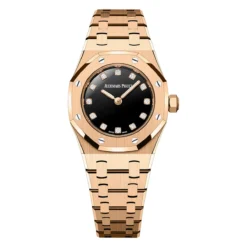 Audemars Piguet 67630OR.OO.1312OR.01-B Royal Oak Mini 23mm Pink Gold Black Onyx Diamond Watch$105,000
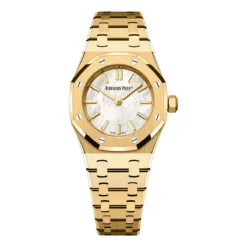 Audemars Piguet 67630BA.OO.1312BA.03-B Royal Oak Mini 23mm Yellow Gold White Mother of Pearl Watch$108,500
 Audemars Piguet 15210ST.OO.A009KB.01 Code 11.59 Selfwinding 41mm Steel Grey Dial Watch$28,700
 Audemars Piguet 77605OK.OO.A101CA.01 Royal Oak Offshore Selfwinding Pink Gold Ivory Dial Watch$60,000
Should You Daily a Skeleton Watch or Keep It as a Special Piece?
This is where you have to be brutally honest with yourself. A skeleton watch can absolutely be your daily companion, but it doesn’t have to be. For many people, it makes more sense as a second or third watch.
Daily wear makes sense when:
- You’ve found a design that you can read instantly in any light.
- It fits comfortably under your usual sleeves and doesn’t snag.
- The overall style matches your environment most days of the week.
“Special piece” status makes sense when:
- The watch is very bold, very colorful, or very large.
- You already own a more neutral daily wearer.
- You like the idea of putting it on for nights out, weekends, or specific outfits.
If you’re only going to own one nice mechanical watch for the foreseeable future, a full-skeleton statement piece probably isn’t the safest choice. But if you’re building a small collection where each watch has a clear role, one good skeleton is a fantastic “joy” slot.
Final Thoughts: Is a Skeleton Watch Right for You?
If you love the idea of seeing the gears turn, hearing a soft mechanical tick, and catching yourself staring at the movement while your coffee gets cold, skeleton watches are going to make you very happy. They’re one of the purest ways to enjoy watchmaking as an art form you can wear.
But they’re not automatically better than solid-dial watches, and they’re not for every situation. Think about your daily life, your clothes, how often you really want your watch to be a conversation starter, and how much you value easy legibility. If, after all that, you still feel the pull of those open bridges and spinning balance wheels, then it’s probably time to try one on and let your wrist decide.
Looking to buy? Browse our collection.
Looking to sell? Get a free quote for your watch.
Frequently Asked Questions
What is a skeleton dial on a watch?
A skeleton dial is a watch dial that has been partially or fully cut away so you can see the mechanical movement underneath. Sometimes it’s just a large window over the balance wheel (often called an open-heart), and sometimes almost the entire dial is replaced by transparent crystal or slender metal bridges. The goal is to showcase the gears, springs, and levers that actually make the watch run. High-end skeleton dials also highlight decorative finishing, like polished bevels and engraving, that would normally be hidden.
Are skeleton watches hard to read?
They can be, but it depends heavily on the design. Skeleton watches with strong contrast between the hands and the movement, plus a clear minute track or hour markers, are usually perfectly usable day to day. The ones that get hard to read often have hands that blend into the exposed mechanics, or very busy dials with no visual anchors. If you’re worried about legibility, look for bold, lume-filled hands and an outer chapter ring that gives your eyes something solid to lock onto.
Are skeleton watches more fragile than regular watches?
Not automatically, but there are trade-offs. True skeletonization removes material from bridges and plates, so those parts can be more delicate during assembly and service. Brands that design movements to be skeletonized from the start usually account for this with smart engineering and testing, especially in higher-end pieces. Day to day, the bigger risks are the same as any mechanical watch: hard knocks, magnetism, and moisture. If you treat your watch with normal care and service it on schedule, a skeleton watch can be just as reliable as a solid-dial piece.
Can a skeleton watch be a dress watch?
Yes, but the style matters. Classic dress skeleton watches tend to be slimmer, with refined cases, simple straps, and restrained movement layouts that prioritize symmetry and elegance over wild shapes or colors. Cartier’s skeleton Tanks and Santos models are good examples of skeletons that still read as quite formal. A large, neon-accented skeleton chronograph, on the other hand, will usually clash with very traditional black-tie outfits and might be better saved for more casual or creative settings.
Do skeleton watches hold their value?
Value retention depends more on the brand, specific model, rarity, and overall market trends than on whether a watch is skeletonized. Some iconic skeleton models from top-tier brands can do very well over time, while generic skeleton designs from less respected makers may not. Because skeleton pieces are more visually distinctive, their resale pool can also be narrower—buyers either love a particular look or they don’t. If long-term value is important to you, focus on reputable brands and well-regarded references, and think of any potential appreciation as a bonus, not a guarantee.
Are skeleton watches good for beginners?
They can be, especially if you’re curious about how mechanical movements work. Partial skeleton or open-heart watches from accessible brands like Tissot let you enjoy that visual interest without spending a fortune. Just be sure you’re choosing it because you genuinely like the look, not only because you feel like you “should” see the movement. Some beginners find that, after the novelty wears off, they prefer a cleaner dial—but others discover that watching the mechanics is exactly what makes them fall in love with the hobby.
How do I style a skeleton watch with my outfits?
Think of a skeleton watch as a stronger visual accessory than a plain-dial piece. If the design is bold or colorful, let it be the main statement and keep other accessories simple—maybe pass on loud cufflinks or big bracelets. Dressier skeletons pair well with tailored clothing and neutral tones, where their detail can stand out without competing. Sporty skeletons look great with smart casual or elevated streetwear. Above all, put it on with the clothes you actually wear most and look in a mirror; if your eye goes to the watch in a good way, you’re on the right track.