

Trends & Culture
The Most Expensive Watches Ever Sold at Auction (And What They Tell Us About Value)
Nov
Quick Answer
The most expensive watches ever sold at auction are almost all about extreme rarity, strong stories, and the right name on the dial. Think Patek Philippe grand complications, historically important Rolex, and a few modern independents that collectors obsess over. These multi-million-dollar hammer prices don’t mean every watch is an “investment,” but they do show which ingredients the market rewards most. If you own a good piece from brands like Patek Philippe, Rolex, Audemars Piguet, F.P. Journe, or Richard Mille, understanding these records can help you judge when—and how—to sell.
Key Takeaways
- The most expensive watches ever sold at auction are dominated by Patek Philippe, with a few headline Rolex and independents mixed in.
- Record prices usually combine brand, rarity, condition, and story—not just complications or precious metal.
- The Patek Philippe Grandmaster Chime ref. 6300A-010 is the most expensive wristwatch ever sold at auction, hitting about $31.19 million for charity in 2019.[1]
- The Henry Graves Supercomplication pocket watch remains the most expensive pocket watch ever sold, at around $24 million.[1]
- Celebrity connection can matter (think “Paul Newman” Daytona), but provenance and originality usually outweigh fame alone.
- Modern brands like F.P. Journe and Richard Mille show that contemporary pieces can also become auction stars when supply is tight and collectors are passionate.
- Your own watch doesn’t need to be a record breaker to be valuable; the same value drivers scale down into the four‑ and five‑figure range.
Every time a headline pops up about a “$30 million watch,” the watch world loses its mind for a day or two. You might shake your head, laugh, or secretly wonder what’s sitting in your own watch box.
Those crazy auction results aren’t just trivia, though. They’re like X‑rays of what collectors really value when the gloves come off and the paddles go up. Brand is part of it, yes, but the details—dial variations, ownership history, originality—are what push a watch from “valuable” to “historic.”
We’ll walk through a ranked look at the most expensive watches ever sold at auction and, more importantly, what they tell you about value. By the end, you’ll be able to look at your own Patek, Rolex, AP, Journe, or Richard Mille with a clearer eye about what actually matters if you ever decide to sell.
What Are the Most Expensive Watches Ever Sold at Auction?
Lists vary slightly depending on currency conversions and how you count charity sales, but a handful of pieces show up every time. Here’s a simplified snapshot of the very top.
| Rank | Watch | Approx. Price (USD) | Type | Why It Mattered |
|---|---|---|---|---|
| 1 | Patek Philippe Grandmaster Chime 6300A-010 | ~$31.19M | Wristwatch | Unique stainless steel grand complication made for charity |
| 2 | Patek Philippe Henry Graves Supercomplication | ~$24M | Pocket watch | Historically important super‑complicated pocket watch |
| 3 | Rolex Daytona “Paul Newman” (Paul Newman’s own) | ~$17.75M | Wristwatch | Iconic model with direct celebrity provenance |
| 4 | Patek Philippe ref. 1518 in stainless steel | ~$11M | Wristwatch | Ultra‑rare steel perpetual calendar chronograph |
| 5 | Patek Philippe Grandmaster Chime 6300G (various) | $7–10M+ | Wristwatch | Most complicated Patek wristwatch in regular production |
The exact ordering below the top few changes as new records are set, but you can already see the pattern: Patek dominates, Rolex crashes the party with a cultural icon, and everything at this level has a serious story behind it.[1]
Inside the Records: What These Watches Actually Are
Patek Philippe Grandmaster Chime 6300A-010 – The $31 Million Headline
The Patek Philippe Grandmaster Chime ref. 6300A-010 is still the most expensive wristwatch ever sold at auction. It hammered for about $31.19 million at the Only Watch charity auction in 2019, in stainless steel of all things—an unusual metal for a Patek of this complexity.
Why so much? It’s unique (the “A” in 6300A stands for acier, or steel), hyper‑complicated, and all proceeds went to charity. Charity auctions often stretch beyond “market price” because donors are also paying for the feel‑good factor and publicity.
The lesson for you: charity results are fun to quote, but they don’t define normal resale value. What they do show is how powerful uniqueness, complication, and the Patek name can be when you stack them together.
Patek Philippe Henry Graves Supercomplication – Pocket Watch Royalty
Before the Grandmaster Chime, the Patek Philippe Henry Graves Supercomplication pocket watch held the overall watch record. It sold for around $23.98 million (commonly rounded to $24M) at auction in 2014, making it the most expensive pocket watch ever sold at auction.[1]
Commissioned in the 1920s by banker Henry Graves Jr., it packed in 24 complications in an era when everything was done by hand. There’s history, documented ownership, absurd craftsmanship, and the sense that this is a one‑off summit of mechanical watchmaking from its time.
Here the takeaway is provenance and historical importance. Age alone doesn’t make a pocket watch valuable. Being a documented, peak‑achievement piece from a blue‑chip brand does.
Rolex Daytona “Paul Newman” – When Culture Meets Steel
Paul Newman’s own Rolex Daytona “Paul Newman”—a ref. 6239 given to him by his wife Joanne Woodward—sold for roughly $17.75 million in 2017. For a steel chronograph that originally cost a few hundred dollars, that’s a wild arc.
The watch itself is a “Paul Newman” because of its exotic dial layout: Art Deco numerals, contrasting subdials, little design quirks that most people ignored when new. The watch became desirable decades later when collectors connected this dial style to photos of Newman wearing his.
The core lesson here: celebrity helps, but the market had already fallen in love with the “Paul Newman” dial variant before Newman’s personal watch came up. The celebrity link poured fuel on a fire that was already burning, thanks to rarity, aesthetics, and the broader Rolex Daytona story (if you want to go deeper on that rabbit hole, there’s a great background read in Rolex “Paul Newman” Daytona: The Watch That Changed Collecting Forever).
Patek Philippe Ref. 1518 in Steel – When Steel Beats Gold
Most people assume gold is always more valuable than steel. Patek’s ref. 1518 in stainless steel is a perfect example of why that’s not true. It’s an early perpetual calendar chronograph produced during the 1940s, and only a handful were made in steel.
One of these sold for around $11 million, and others have followed at similarly eye‑watering levels. The rarity of steel—combined with the toolish, wartime vibe—makes it fascinating to serious collectors who already own the gold versions.
So when you hear someone say “it’s only steel,” you know better. Material is just one part of the puzzle; scarcity and collector taste can matter more.
What These Records Tell You About Real‑World Watch Value
It’s entertaining to read about $20M pocket watches, but the real value of these stories is how they map onto the pieces you might actually own. Strip away the zeros, and the same themes show up again and again.
- Brand hierarchy: Patek Philippe and Rolex sit at the top of the pyramid. Audemars Piguet, F.P. Journe, and Richard Mille often show up just below in “modern grail” territory.
- Rarity with a reason: Limited production, unusual metals, early series, special dials—anything that makes a watch objectively harder to find.
- Provenance: A documented chain of ownership, ideally with some romance: original owner, interesting background, or notable wearer.
- Condition and originality: Unpolished cases, crisp hallmarks, untouched dials, and matching parts quietly move prices more than most people realize.
- Culture: When a watch becomes shorthand for something—Newman, Nautilus, Royal Oak skeletons, wild Richard Mille colors—desire follows.
If you own, say, a vintage Patek with original papers, sharp lugs, and an uncommon dial, you’re riding the same value drivers as these global records—just adjusted for scale.
Brand by Brand: How the Big Names Behave at Auction
Patek Philippe – The Reference Point
Patek Philippe is the backbone of any “most expensive watches ever sold at auction” list. Between the Grandmaster Chime, the Henry Graves Supercomplication, steel 1518s, and high‑end perpetuals and minute repeaters, Patek owns most of the top slots.
For modern Patek, the jump in value usually happens around high complications (perpetual calendars, minute repeaters) and iconic designs (Nautilus, some Gondolo pieces, unusual limited editions). Vintage Patek is its own universe: small production, hand‑finished details, and a collector base that studies minute dial variations.
If you’re holding a Patek and wondering about value, things like original certificate, retailer signature on the dial, and early production numbers can matter a lot. For more background on why their older pieces do what they do, this deep dive is helpful: Why Vintage Patek Philippe Watches Fetch Millions at Auction.
Rolex – Steel Sports and Storytelling
Rolex might not dominate the very top of the list the way Patek does, but when a Rolex hits, it hits hard. The Paul Newman Daytona record is the obvious example, but exotic dial Day‑Dates, early Submariners, and rare GMTs have all had their moments.
The sweet spot for Rolex is often “tool watch plus twist”: a military‑issued Sub, a tropical dial Explorer, a misprinted GMT. Steel cases with quirks often out‑perform more common gold models because they have that blend of practicality and story.
From a resale perspective, it means the right Rolex sports watch with a desirable configuration, full set (box and papers), and sharp case can punch well above retail.
Audemars Piguet – The Royal Oak Effect
Audemars Piguet lives in auction catalogs largely on the shoulders of the Royal Oak and Royal Oak Offshore. Early “Jumbo” references, special dials, skeletons, and high‑complication Royal Oaks are where you see the heat.
AP has much more to offer (classical dress pieces, minute repeaters, perpetual calendars), but the market attention tends to chase that octagonal silhouette. Low production runs, collaborations, and unusual materials all help nudge values up.
If your AP is a more traditional piece, don’t assume it’s ignored; it just tends to appeal to a quieter, more movement‑focused audience than the big‑bracelet crowd looking at Audemars Piguet watches for the Royal Oak vibe.
F.P. Journe – Modern Independent, Serious Heat
F.P. Journe is the poster child for modern independents becoming auction darlings. Tiny production, distinctive aesthetics, and François‑Paul Journe’s reputation have pushed early tourbillons, Resonance pieces, and rare dials into six‑ and seven‑figure territory at major sales.
What’s interesting is that much of this action is recent. Ten or fifteen years ago, most people had no idea who Journe was; now some of his early work competes with blue‑chip Swiss maisons on price. That’s the “independent risk/reward” profile—values can move fast in both directions.
The broader lesson: brand age isn’t mandatory if the watches are excellent, the story is clear, and production is genuinely limited.
Richard Mille – Hype, Tech, and Scarcity
Richard Mille is the watch equivalent of a supercar brand: bold, technical, and intentionally scarce. You’ll see their most extreme, limited references hit big numbers at auction, especially those linked to specific athletes or made from unusual materials.
There’s a lot of “want” baked into the pricing, fueled by social media and celebrity wrists. But underneath that, the brand does use sophisticated materials and complex case construction that appeal to a certain collector profile.
If you’re thinking about selling a Mille, timing matters. Their market can be fashion‑sensitive, so it’s smart to get a feel for demand before you move—this is where getting multiple opinions or a free quote from a place like the team at MIO can be useful.
Key Ingredients Behind Multi‑Million-Dollar Auction Prices
Zooming out from individual brands, here’s what the auction market consistently rewards, ranked in rough order of importance.
1. Brand and Legacy
There are exceptions, but at the very top you almost always see brands with deep roots, documented archives, and consistent quality. Patek Philippe and Rolex are the poster children, with AP not far behind.
That legacy reassures bidders that these aren’t one‑hit wonders. For your own watches, sticking with strong brands doesn’t guarantee a win, but it tilts the odds in your favor if value retention matters to you.
2. Rarity You Can Explain
“It’s rare” only helps if you can answer “why?” Maybe it’s a short production run, a special dial variant, an unusual metal (like steel 1518s), or a watch made for a specific market.
When rarity is backed up by production figures, archive extracts, or scholarship, it becomes a serious price driver. When it’s just a sales pitch, the market tends to shrug.
3. Condition, Originality, and Completeness
Unpolished cases with strong edges. Original dials with correct printing and even aging. Matching hands. Movements that haven’t been hacked up by bad service. A “full set” (original box, papers, accessories).
Each of those details is a multiplier. Two identical references can trade at drastically different levels just because one has been polished flat and the other has sharp lugs and original lume. If you’re planning to hold, it’s worth paying a bit more for the right example.
4. Provenance and Story
Celebrity ownership is the flashy version of this, but even a well‑documented one‑owner watch can get bidders more comfortable stretching. Archive extracts, original sales receipts, family letters—anything that nails down the story helps.
When you’re buying, saving that paperwork feels fussy. When you’re selling fifteen years later, it’s gold.
5. Culture and Timing
Sometimes a watch taps into the mood of the moment: integrated‑bracelet steel sport watches, bright Richard Mille cases, funky indie dials. That’s where you get fast climbs—and occasionally sharp corrections.
If your watch is hot purely because it’s trending, think of that as a nice bonus, not the whole thesis. Long term, fundamentals win.
How This Translates to the Watch in Your Safe
You don’t need a Grandmaster Chime for this to matter. Let’s take a typical scenario: you have a steel Rolex sports watch, a dress Patek, or an Audemars Piguet you bought years ago and rarely wear.
- Check your set: Do you still have the original box, warranty card, booklets, and receipts? That’s instant value add.
- Look closely at the case and dial: Over‑polishing, replacement hands, or a service dial can soften value. Not always a dealbreaker, but good to know.
- Figure out how common your exact reference is: Sometimes a small production run or a short‑lived dial tweak makes “your” version more desirable.
- Get documentation: For brands like Patek, an archive extract can be worth the hassle. It helps anchor your watch in the brand’s history.
If you’re thinking seriously about selling, it’s smart to gather this info before you ask for offers. You’ll have a better sense of what you’re holding, and you’ll spot lowball numbers more easily. When you’re ready, you can always get a free quote just to see where the market is.
When Does It Make Sense to Sell Into a Strong Market?
One of the big questions all this auction talk raises is: “Am I missing the peak?” There’s no perfect answer, but you can be rational about it.
- Your watch feels more like a stock than something you love: If you’re checking prices more than you’re wearing it, that’s a sign.
- The watch no longer fits your lifestyle: A gold perpetual calendar that never leaves the safe might do more for you as cash or a more wearable piece.
- Market sentiment has been hot for a while: If a reference has already tripled in a short period, you don’t have to chase the last 10% of upside.
- You’re consolidating: Selling one strong piece to fund a “grail” you actually want to wear can be a good trade.
On the other hand, it can make sense to wait if:
- You bought a genuinely rare piece from a top brand at a fair price and market interest is still building.
- Your emotional attachment is high, and selling would feel like a loss even if the math looks good.
- The market feels panicky—fire‑sale vibes rarely favor the seller.
Keep reminding yourself: watches are not required to “perform.” They’re allowed to just be beautiful objects you enjoy. The auction records are reference points, not obligations.
New Arrivals at MIO
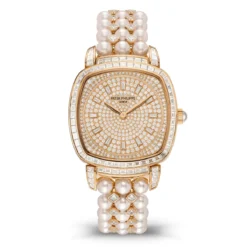 Patek Philippe 7042/100R-010 Gondolo Haute Joaillerie 31 x 34.8mm Rose Gold Diamond and Akoya Pearl Watch Original price was: $263,566.$255,000Current price is: $255,000.
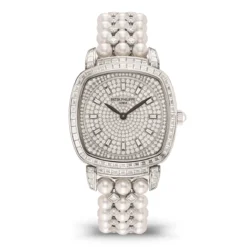 Patek Philippe 7042/100G-010 Gondolo Haute Joaillerie 31 x 34.8mm White Gold Diamond and Akoya Pearl Watch Original price was: $263,566.$255,000Current price is: $255,000.
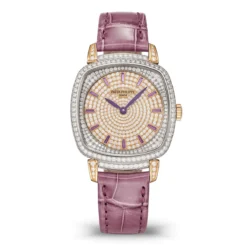 Patek Philippe 7043/250GR-001 Gondolo Ladies First Joaillerie 31 x 34.8mm White Gold Rose Gold Diamond Amethyst Watch$68,768
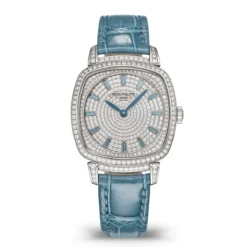 Patek Philippe 7043/250G-001 Gondolo Ladies First Joaillerie 31 x 34.8mm White Gold Diamond Blue Topaz Watch$78,768
Practical Tips If You’re Thinking of Selling
Let’s bring it down from eight‑figure headlines to the concrete steps that can actually put money back in your pocket.
1. Document What You Have
Gather everything: box, papers, receipts, service records, extra links, tags. Take clear, well‑lit photos of the dial, case front, sides, back, clasp, and any engravings.
For high‑end Patek Philippe, an archive extract can be worth ordering before you sell. For Rolex, noting the serial and reference range can help buyers place your watch in the production timeline (which sometimes affects desirability).
2. Be Honest About Condition
Every watch has a past. Light scratches are normal; over‑polishing, moisture damage, or sloppy aftermarket work are bigger issues. Don’t be afraid of the truth—buyers and dealers will see it anyway.
If your watch hasn’t been serviced in many years, that’s not automatically bad. Some collectors prefer “untouched” pieces and will choose their own watchmaker later. Just don’t advertise it as “freshly serviced” unless you can back that up.
3. Research Comparable Sales (Not Asking Prices)
There’s a big difference between what people ask and what actually sells. Try to find realized prices for watches that are genuinely comparable: same reference, similar condition, similar completeness (full set vs. watch only).
Be conservative. If your watch is in between “honest wear” and “collector‑grade,” don’t price it like the museum piece.
4. Decide If You Want Speed or Maximum Price
Fast, certain cash almost always means accepting a bit less than a theoretical top‑of‑market price, especially on modern pieces. If you have time and patience, consigning or waiting for the right private buyer can pay off.
There’s no universal “right” choice here—just what fits your situation. Sometimes you want the trade done so you can move on to the next watch without stress.
5. Think in Portfolios, Not Singles
If you have multiple high‑end watches, think about the collection as a whole. Maybe your Patek is the long‑term keeper, your Rolex is at a good spot to sell, and your Richard Mille feels like a trade for something more classic.
This is where understanding the patterns behind the most expensive watches ever sold at auction really helps. You’re reading the same signals—brand, rarity, story—just scaled to your own level.
Final Thoughts: Enjoy the Headlines, Learn from the Patterns
Those auction numbers are fun bar stories, but they’re also clues. They show you what serious collectors care about when the stakes are high: brand, history, rarity that’s real, and watches that haven’t been messed with.
You don’t need to chase the next record or treat your wrist as a stock portfolio. If you understand why the big pieces brought what they did, you’re already ahead of most people when it comes to buying, holding, or eventually letting a watch go. The important part is that your collection makes sense for you—emotionally, financially, and on the wrist.
Looking to buy? Browse our collection.
Looking to sell? Get a free quote for your watch.
Frequently Asked Questions
What is the most expensive watch ever sold at auction?
The most expensive watch ever sold at auction is the Patek Philippe Grandmaster Chime ref. 6300A-010, which achieved about $31.19 million at the Only Watch charity auction in 2019. It’s a unique stainless steel version of Patek’s hyper‑complicated Grandmaster Chime, specially created for that event. Because it was a charity sale, the result is higher than what a standard market transaction might produce, but it still illustrates how powerful the combination of Patek Philippe, true uniqueness, and high complication can be. It also cemented the Grandmaster Chime as the top of Patek’s modern pyramid.
What is the most expensive pocket watch ever sold at auction?
The most expensive pocket watch ever sold at auction is the Patek Philippe Henry Graves Supercomplication. It sold in 2014 for around $23.98 million, often rounded to $24 million. Commissioned by banker Henry Graves Jr. in the 1920s, it features 24 complications and was, for decades, one of the most complex watches ever made. Its record shows how historic importance and documented provenance can matter just as much as metal or gem‑setting.
Are charity auction results accurate indicators of value?
Charity auction results are interesting, but they’re not pure market prices. Bidders know their money is going to a cause, and they may be paying for publicity or goodwill as much as for the watch itself. The Patek Philippe Grandmaster Chime 6300A-010 is the best example: its $31.19 million result reflects both the watch and the charity context. These results are still useful as data points, but for regular selling decisions, it’s better to look at non‑charity auction results and private‑market trades.
Do celebrity watches always sell for more?
Celebrity ownership can add value, but it’s not automatic. The Rolex Daytona owned by Paul Newman exploded in price because it combined a desirable reference, a rare dial type, a strong pre‑existing collector following, and direct, well‑documented connection to Newman. A random watch owned by a mildly famous person, with weak documentation, won’t have the same impact. In most cases, condition, originality, and reference rarity matter more than a lightly famous first owner.
Will my Rolex or Patek Philippe keep going up in value?
There’s no guarantee that any modern Rolex or Patek Philippe will continuously rise in value. Over long stretches, many sought‑after references from these brands have trended upward, but there have also been periods of stagnation and pullbacks. What helps your odds are strong fundamentals: a desirable reference, good condition, original parts, and a complete set. It’s smarter to buy what you’d be happy owning even if values flatten, and treat any appreciation as a bonus, not a promise.
Why do some steel watches sell for more than gold ones?
Steel watches can out‑price gold when steel is significantly rarer or more culturally appealing. For example, Patek Philippe’s ref. 1518 in stainless steel is far rarer than its gold counterparts and has a unique tool‑watch character, so it has fetched much higher prices at auction. With Rolex sports models, steel is often more desirable than gold because it fits the original “tool watch” concept better and is more wearable day to day. In short, desirability plus rarity beat raw metal value.
How can I tell if my watch has good auction-style potential?
Start with the basics: Is it from a top brand like Patek Philippe, Rolex, Audemars Piguet, F.P. Journe, or Richard Mille? Then look at reference, rarity, and condition: uncommon references or dial variants, original parts, unpolished cases, and full sets all help. Check comparable sales, focusing on realized prices rather than asking prices. If your watch lines up well on those points, it may not be a record breaker, but it could be a strong performer if you ever decide to sell.