

Brand History & Storytelling
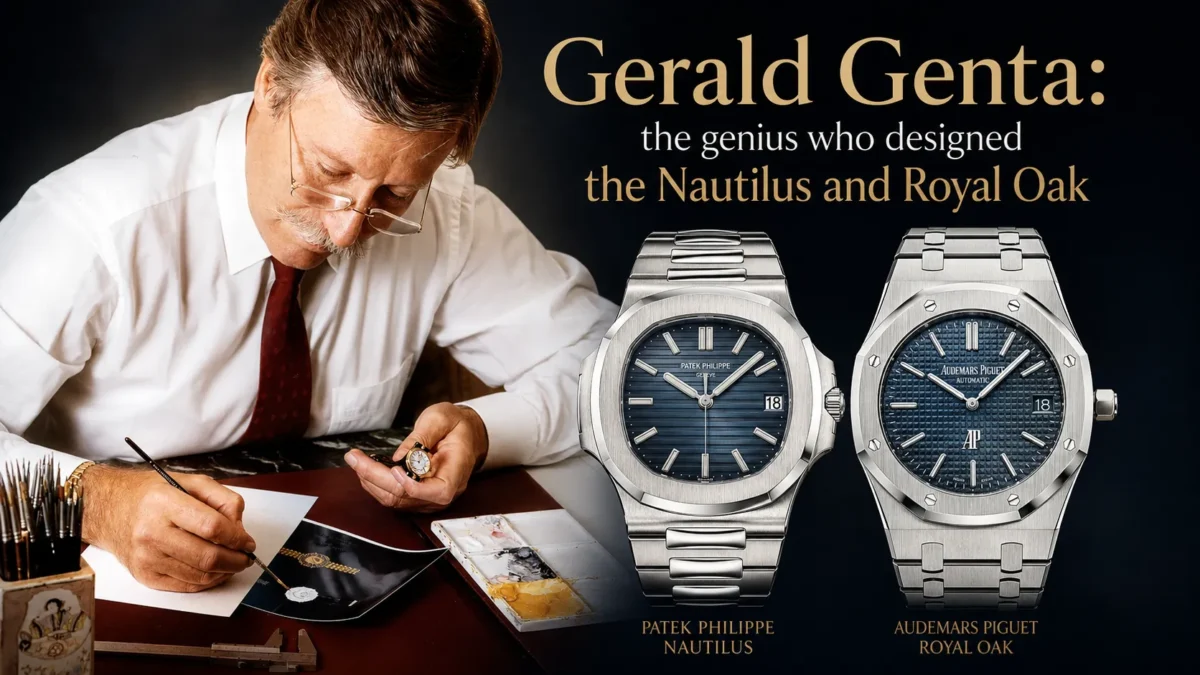
Gerald Genta: The Genius Who Designed the Nautilus and Royal Oak
Jul
Last updated: July 22, 2026
Quick Answer: Gerald Genta was a Swiss watch designer born in Geneva in 1931 whose pen produced two of the most valuable and sought-after luxury timepieces ever made, the Audemars Piguet Royal Oak and the Patek Philippe Nautilus. He is widely regarded as the single most influential watch designer of the 20th century, responsible for creating the luxury sports watch category that still dominates the market in 2026.
Key Takeaways
- Gerald Genta (1931-2011) was born in Geneva to Italian and Swiss parents and trained as a goldsmith and jeweler before becoming a watch designer.
- He designed the Audemars Piguet Royal Oak in 1972 and the Patek Philippe Nautilus in 1976, both now considered the holy grail of luxury sports watches.
- Genta reportedly sketched the Royal Oak design in a single night, delivering it to Audemars Piguet just in time for the 1972 Basel Watch Fair.
- His broader portfolio includes designs for Omega, IWC, Universal Genève, Cartier, Bulgari, and Disney, among others.
- Genta founded his own eponymous brand, which Bulgari acquired and later sold to LVMH, where it continues producing watches today.
- His wife Évelyne Genta founded the Gerald Genta Heritage Association in 2019 to preserve and promote his legacy.
- Original Gerald Genta-designed watches now command extraordinary prices at auction, with the Royal Oak and Nautilus ranking among the most investment-grade timepieces in existence.
Who Was Gerald Genta and Why Is He Famous?
Gerald Genta, full name Gérald Charles Genta, was a Geneva-born Swiss watch designer whose career fundamentally changed the direction of luxury watchmaking. Born in 1931 to Italian and Swiss parents, he trained first as a goldsmith and jeweler before channeling that metalwork expertise into watch design, ultimately creating a body of work that no other single designer in the industry’s history has matched.
The reason Genta commands such reverence is straightforward: he designed the two watches that defined the modern luxury sports watch category. The Audemars Piguet Royal Oak (1972) and the Patek Philippe Nautilus (1976) were radical departures from convention, stainless steel sport watches sold at prices previously reserved for gold dress watches. Both are now among the most investment-grade timepieces ever produced.
Waltana has described Genta as the “Picasso of watchmaking,” arguing that “arguably the most significant watches of the 20th century” came from his drafting table. That label, genius genta, is not hyperbole. It reflects an industry consensus built over five decades.
Early Life and Starting Career with Universal Genève
Genta’s formative years in Geneva gave him a dual foundation in fine art and precision craft. His goldsmith training instilled an understanding of metal as both structural material and aesthetic medium, a perspective that would later define his approach to case and bracelet integration.
His professional career began at Universal Genève, a prestigious Swiss manufacture where he honed his design sensibility working on the Polerouter, a watch widely credited to his pen. This early work established several hallmarks of the genta design language: clean geometric forms, integrated bracelets, and a refusal to separate the watch case from its strap as an afterthought.
From Universal Genève, Genta moved through several commissions, designing for Omega, including work on the Constellation, and for IWC, where his influence on the Ingenieur SL “Jumbo” Ref. 1832 cemented his reputation as the industry’s foremost design talent.
What Watches Did Gerald Genta Design Before the Nautilus?
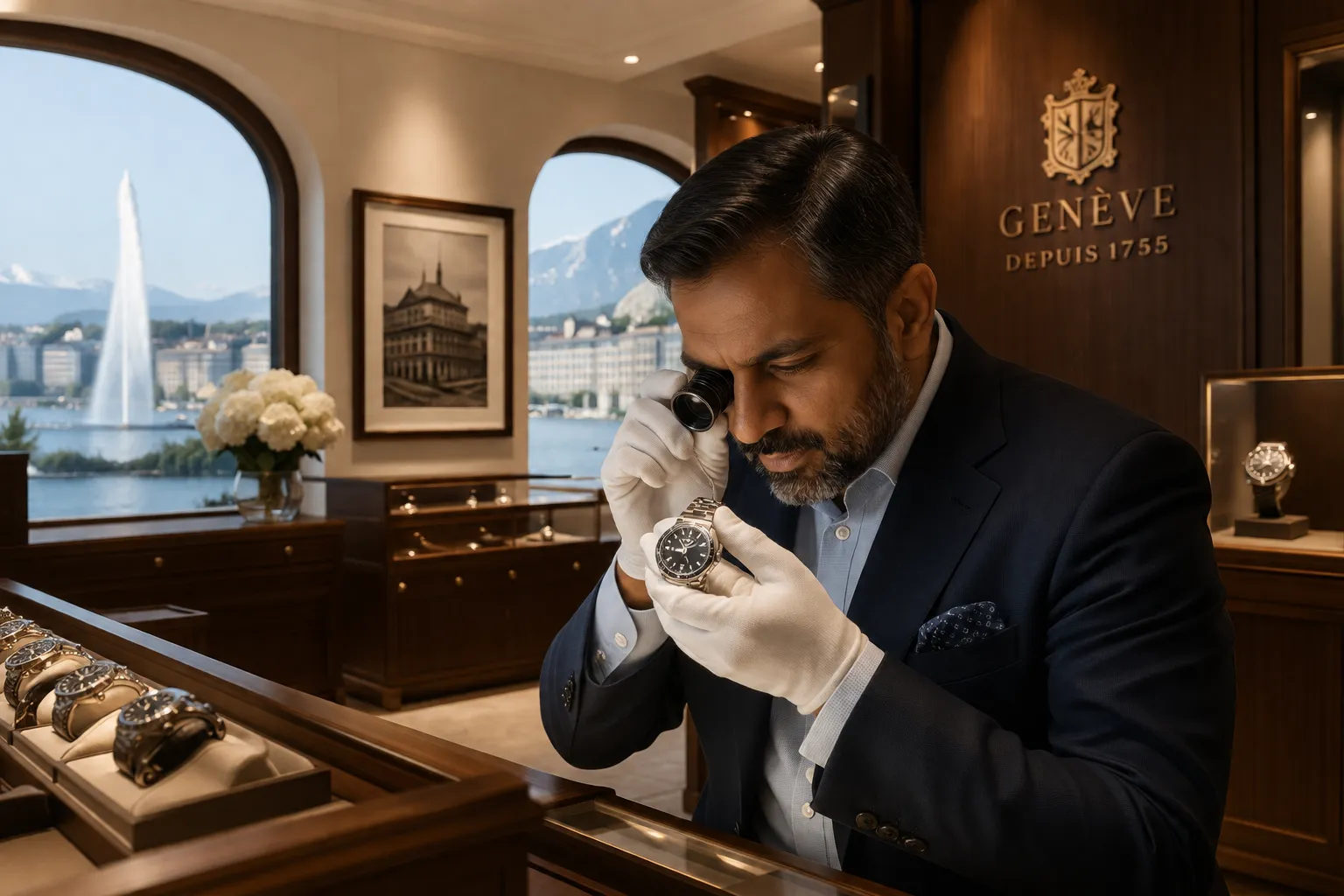
Before the Nautilus, Genta had already built a remarkable portfolio that spanned multiple Swiss and European brands. His pre-Nautilus body of work demonstrates the breadth of influence that made him the go-to designer for any brand seeking a landmark timepiece.
Key pre-Nautilus designs attributed to Genta:
- Universal Genève Polerouter, an early integrated-bracelet design that previewed his later sports watch language
- Omega Constellation, a refined dress watch that brought his geometric sensibility to a mass-market Swiss brand
- IWC Schaffhausen Ingenieur SL “Jumbo” Ref. 1832, a bold sports watch that shares the integrated bracelet DNA of the Royal Oak
- Cartier Pasha, a distinctive porthole-inspired case that echoes themes he would later develop for the Nautilus
- Rolex King Midas, a gold bracelet watch that showcased his jewelry background
Each of these designs reinforced what would become the genta signature: the seamless union of case, dial, and bracelet as a single sculptural object.
How Did Gerald Genta Design the Royal Oak, and Why Was It Revolutionary?
The Audemars Piguet Royal Oak is the design that made Genta a legend. The story behind it is as remarkable as the watch itself.
In 1971, Audemars Piguet CEO Georges Golay approached Genta with an urgent commission: design a luxury sports watch for the 1972 Basel Watch Fair, with almost no lead time. According to widely cited accounts, Genta sketched the entire Royal Oak concept in a single night, drawing inspiration from a traditional diving helmet, specifically the octagonal porthole bolted shut with exposed screws. The result was a stainless steel watch with an octagonal bezel secured by eight hexagonal screws, a tapisserie “Petite Tapisserie” dial, and a fully integrated bracelet that flowed directly from the case.
When Audemars Piguet launched the Royal Oak in 1972, priced at approximately five times the cost of a gold Rolex Submariner, the industry was stunned. Steel watches simply were not sold at luxury prices. The Royal Oak changed that permanently.
Today, the Audemars Piguet Royal Oak remains the brand’s flagship and one of the most recognized watch designs on earth. Collector demand for references like the Royal Oak Selfwinding 15500ST consistently exceeds supply.

How Did Gerald Genta Design the Patek Philippe Nautilus?
Four years after the Royal Oak, Patek Philippe approached Genta with a similar brief: create a luxury steel sports watch that could compete in the category he had effectively invented. The result was the Patek Philippe Nautilus, launched in 1976.
Genta drew inspiration from a ship’s porthole for the Nautilus case, a rounded, horizontally oriented shape with a distinctive “ear” lug design and a hinged case back. The integrated bracelet featured horizontal embossed lines that echoed the dial’s texture, creating the same unified aesthetic language he had established with the Royal Oak.
How much did Gerald Genta get paid for the Nautilus design? Published accounts suggest Genta received a fee of approximately CHF 2,000 for the Nautilus design, a figure that, given the watch’s current market value (with references like the 5711 trading well above CHF 100,000 at retail and far higher at auction), stands as one of the most remarkable mismatches between creative compensation and commercial outcome in luxury goods history.
The philippe nautilus went on to become Patek Philippe’s best-selling model family and one of the defining symbols of luxury watch collecting worldwide.
What Makes the Royal Oak Different from the Nautilus?
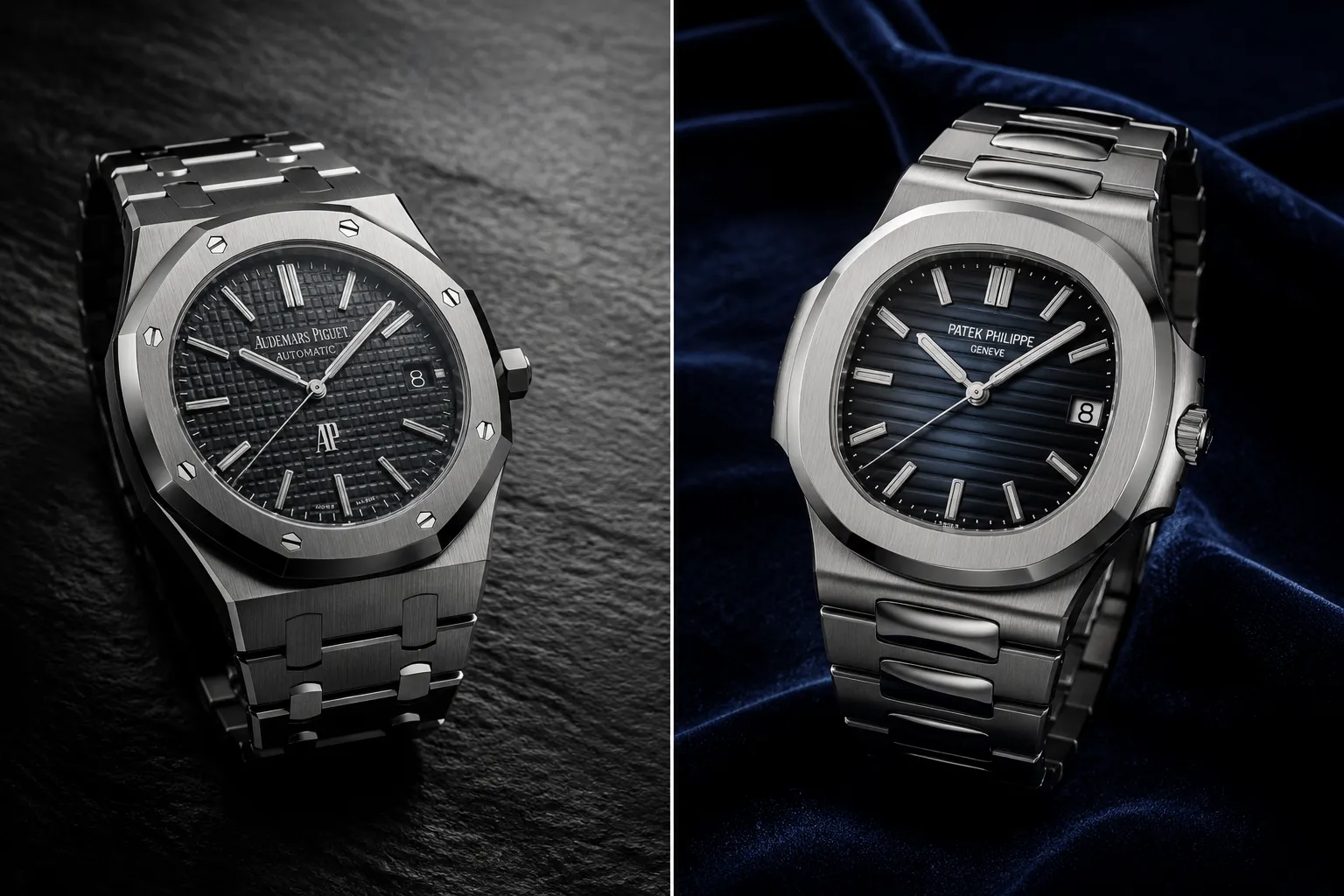
Both watches share a common designer and a common philosophy, but they are distinct objects with different personalities. Understanding the difference is essential for any serious collector.
| Feature | Audemars Piguet Royal Oak | Patek Philippe Nautilus |
|---|---|---|
| Launch year | 1972 | 1976 |
| Case shape | Octagonal bezel, eight screws | Rounded porthole, horizontal lugs |
| Dial texture | Tapisserie “Petite Tapisserie” | Horizontal embossed lines |
| Brand identity | Sports-luxury, bold | Refined sports, understated |
| Entry reference | 15500ST | 5711/1A |
The royal oak presents a more angular, assertive character, the octagonal bezel and exposed screws give it an industrial confidence. The oak patek, or more precisely, the Nautilus, is softer in form, with a rounded case that reads as more discreet on the wrist. Both feature the integrated bracelet that is the genta heritage signature, but they express it differently.
For collectors choosing between them: the Royal Oak is the bolder statement; the Nautilus is the more understated one. Both are equally investment-grade.
Gerald Genta’s Eponymous Brand, Famous Clients, and Disney Watches
In 1969, Genta founded his own label, the brand that would bear his name and allow him full creative freedom. The Gerald Genta brand became known for extraordinary complications: grande sonneries, minute repeaters, and retrograde displays executed with a level of technical ambition that matched his aesthetic vision.
His famous clients included royalty, heads of state, and cultural figures across Europe and beyond. The brand produced bespoke pieces for clients who demanded watches that were both technically supreme and visually singular.
Among the most beloved products of the Gerald Genta brand are the Disney watches, whimsical, highly collectible pieces featuring characters such as Mickey Mouse rendered in Genta’s signature style. These watches demonstrated that genius genta could operate with equal conviction in the playful and the profound. The Disney pieces remain highly sought after among collectors today.
The brand also produced the Big Ben series, a distinctive rectangular case design that became another genta heritage touchstone.
Acquisition by Bulgari, Then LVMH, and the Brand Today
After Genta’s passing in 2011, the brand he built continued under new ownership. Bulgari acquired the Gerald Genta brand, and it subsequently passed to LVMH, the Paris-based luxury conglomerate.
Under LVMH stewardship, the brand has been revived with contemporary expressions that honor Genta’s design language. In January 2026, the Gerald Charles label introduced the Geneva Time Only “Marrone” and “Grafite” at LVMH Watch Week, 38 mm rose gold or white gold cases, just 8.15 mm thin, priced at CHF 25,000 each, powered by a Zenith Elite-based caliber GG-005P running at 4 Hz with a 50-hour power reserve. These new beginnings signal that the genta aesthetic remains commercially and creatively vital.
In 2019, Évelyne Genta, his wife, founded the Gerald Genta Heritage Association to preserve his contribution to watchmaking and support emerging talent, formalizing the legacy through institutional recognition.
A London exhibition titled “Gérald Genta: Vibration of Colour” ran at HENI Gallery in June and July 2026, presenting his paintings and positioning him as a “legendary Swiss artist and watch designer”, a reminder that his creative output extended well beyond horology.
Gerald Genta’s Design Philosophy and Lasting Influence on Modern Watchmaking
Genta’s design philosophy rested on a single conviction: a watch must be conceived as a complete object, not as a case fitted with a strap. The integration of bracelet and case, so natural today that collectors take it for granted, was a radical idea when Genta first executed it.
His jewelry and goldsmith training gave him a sculptor’s eye. Where other designers saw a watch as a mechanical instrument housed in a container, Genta saw it as a wearable sculpture in which every surface, angle, and texture contributed to a unified whole.
What made his designs revolutionary for their time:
- Stainless steel elevated to luxury status, previously unthinkable at the prices he commanded
- Integrated bracelets that flowed from the case rather than attaching to it
- Geometric case shapes (octagonal, porthole) drawn from architecture and industrial design rather than traditional watchmaking
- Dial textures that complemented rather than competed with the case form
- A refusal to separate aesthetic ambition from technical execution
His influence on modern watch design is total. Every luxury sports watch produced today, from the AP Royal Oak Offshore to the Patek Aquanaut, descends directly from the design language Genta established between 1972 and 1976.
How Much Are Original Gerald Genta Designs Worth?
Original genta-designed watches now represent some of the most investment-grade timepieces available to collectors. The Royal Oak and Nautilus consistently rank among the top-performing watches at auction and in the secondary market.
Specific data points from the market:
- The Patek Philippe Nautilus 5711/1A, particularly the final olive green dial edition, traded at multiples of its CHF 34,893 retail price immediately upon release, with secondary market values exceeding CHF 150,000 in 2021.
- Audemars Piguet Royal Oak references in steel routinely command premiums of 50-200% over retail on the secondary market.
- Vintage Royal Oak references from the 1970s, the original rald genta-era pieces, have sold at major auction houses for six figures.
- The new Gerald Charles Geneva Time Only models are positioned at CHF 25,000, reflecting the brand’s intent to occupy the upper-mid tier of the luxury market.
For collectors seeking certified authentic, investment-grade timepieces from the genta legacy, the Royal Oak and Nautilus families remain the most compelling choices available.
Is Gerald Genta Still Designing Watches Today?
Gerald Genta passed away on August 5, 2011, in Monaco, at the age of 80. He is no longer designing watches. However, his legacy continues through multiple channels.
The brand bearing his name, now under LVMH, continues producing watches that draw on his design vocabulary. The Gerald Charles label’s 2026 Geneva Time Only releases demonstrate that his aesthetic language remains a living creative force. His daughter Alexia Genta and his wife Évelyne Genta have both spoken publicly about his work and the origin of the Royal Oak, keeping his story in active circulation among collectors and the press.
The Gerald Genta Heritage Association, founded in 2019, ensures that his contribution to watchmaking is formally recognized and that his influence on the next generation of designers is actively cultivated.
FAQ: People Also Ask About Gerald Genta
Who designed Nautilus and Royal Oak?
Both the Patek Philippe Nautilus and the Audemars Piguet Royal Oak were designed by Gérald Charles Genta, a Swiss watch designer born in Geneva in 1931. He created the Royal Oak in 1972 and the Nautilus in 1976. Both watches are now considered the most iconic and investment-grade luxury sports timepieces ever produced, and they remain the defining works of his extraordinary career.
What are the three holy grail watches?
The three holy grail watches in luxury collecting are generally considered to be the Patek Philippe Nautilus, the Audemars Piguet Royal Oak, and the Rolex Submariner. Two of the three, the Nautilus and the Royal Oak, were designed by Gerald Genta. These watches combine heritage, scarcity, brand prestige, and secondary market performance in a way no other references consistently match.
Did Gerald Genta design the Bulova Royal Oak?
No. Gerald Genta did not design a Bulova Royal Oak. The Royal Oak he designed was exclusively for Audemars Piguet, launched in 1972. There is no credible historical record of a Bulova Royal Oak designed by Genta. The Audemars Piguet Royal Oak remains the sole watch of that name in his verified portfolio.
Who designed the Audemars Piguet Royal Oak?
The Audemars Piguet Royal Oak was designed by Gérald Genta in 1971-1972, reportedly in a single night, and launched at the Basel Watch Fair in April 1972. Genta drew inspiration from a traditional diving helmet porthole, creating the octagonal bezel, eight-screw design, and integrated bracelet that define the watch to this day. It remains Audemars Piguet’s most iconic and commercially significant model.
Conclusion: The Enduring Investment Case for Genta’s Legacy
Gerald Genta: the genius who designed the Nautilus and Royal Oak left the watch world with something no other single designer has matched, two watches that created an entirely new market category and continue to appreciate in value more than five decades after their introduction.
For serious collectors and luxury investors, the message is clear. The Royal Oak and Nautilus are not merely watches. They are certified authentic, investment-grade timepieces with a documented provenance that traces directly to the most creative mind in the history of Swiss watchmaking. Their scarcity, brand prestige, and cultural weight make them the most defensible assets in any serious horological portfolio.
MioJewelry offers an exclusive collection of Audemars Piguet Royal Oak and Patek Philippe Nautilus references, each authenticity guaranteed, available with white-glove service and fully insured overnight shipping. Explore the complete Royal Oak collection or browse the Nautilus family to find the reference that belongs in your collection.
References
Gérald Genta – https://en.wikipedia.org/wiki/G%C3%A9rald_Genta
Watch Glossary Gerald Genta – https://www.gq.com/story/watch-glossary-gerald-genta
Watch (YouTube) – https://www.youtube.com/watch?v=0b-esaDPPSI
Gerald Genta Der Mann Der Nautilus Royal Oak Co Ein – https://www.derstandard.at/story/2000120193563/gerald-genta-der-mann-der-nautilus-royal-oak-co-ein
Article Gerald Genta Legendary Watch Designer – https://www.reddit.com/r/VintageWatches/comments/g0j36r/article_gerald_genta_legendary_watch_designer/