

Collector Culture
Limited Editions Watches: Hype vs. Real Collector Value
Jun
Last updated: June 17, 2026
Quick Answer
Limited editions watches: hype vs. real collector value comes down to one rule — scarcity alone doesn’t create lasting worth. A limited edition holds value when it combines a respected brand, genuine horological merit, low and transparent production numbers, and organic collector demand. Marketing-driven “limited” runs of 5,000+ pieces from mid-tier brands rarely appreciate. Verified examples from Patek Philippe, Rolex, and Audemars Piguet do.
Key Takeaways
A watch is “limited” when the manufacturer caps production, but the cap can range from 5 pieces to 50,000 — context matters more than the label.
Real collector value requires brand authority, mechanical significance, condition, and provable demand on the secondary market.
Roughly 70-80% of limited editions fail to outperform their standard siblings at resale, according to dealer data tracked by WatchCharts and Chrono24.
Top performers historically come from Patek Philippe, Rolex, Audemars Piguet, F.P. Journe, and A. Lange & Söhne.
Buy a limited edition because you love it. Treat appreciation as a bonus, not a plan.
Full original kit (box, papers, hangtags, stickers) can lift resale value 15-30%.
“Limited” does not mean “rare.” A 10,000-piece run from a high-volume brand is still common.
What Makes a Watch a “Limited Edition”?
A limited edition watch is one the manufacturer formally restricts in production quantity, usually with a serialized number on the caseback (for example, “47/250”). The brand commits in writing to never produce another piece of that exact reference, dial, and configuration.
Three formats are common:
Numbered limited editions: A fixed, public production cap (e.g., 500 pieces). Each watch is individually numbered.
Limited production runs: The brand announces scarcity but doesn’t always disclose final numbers. Less transparent, generally less valuable.
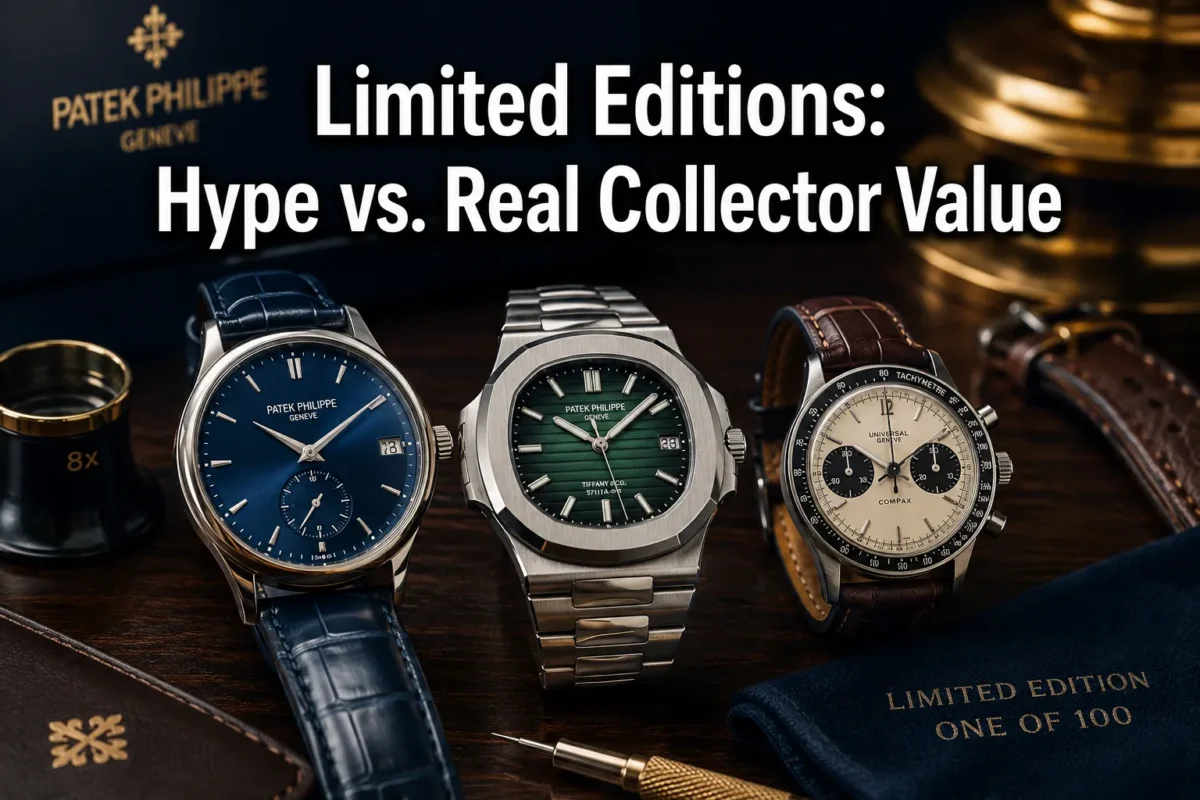
Boutique or country exclusives: Available only at certain stores or markets. The Patek Philippe 5230G-010 World Time New York Special Edition is a strong example — geographic exclusivity plus a serious complication.
Decision rule: If the brand can’t tell you exactly how many were made and where the documentation lives, treat the “limited” label with skepticism.
How Do You Tell the Difference Between Hype and Genuine Collector Value in Watches?
Hype is loud, fast, and driven by influencers, waitlist drama, or a celebrity wrist shot. Genuine collector value is quiet, slow, and driven by horological merit, brand pedigree, and consistent secondary-market demand over 5-10 years.
Use this checklist to separate the two:
SignalHypeReal ValueBrand historyNew or mid-tier50+ years, establishedProduction capVague or 5,000+Transparent, often under 500MovementStock caliber, restyledIn-house, complication, or finishing upgradeDemand sourceSocial media, dropsAuction results, long-term price dataResale after 2 yearsOften below retailStable or appreciatingStoryCollab, color, marketingHeritage, anniversary, technical milestone
“Scarcity without desirability is just inventory.”
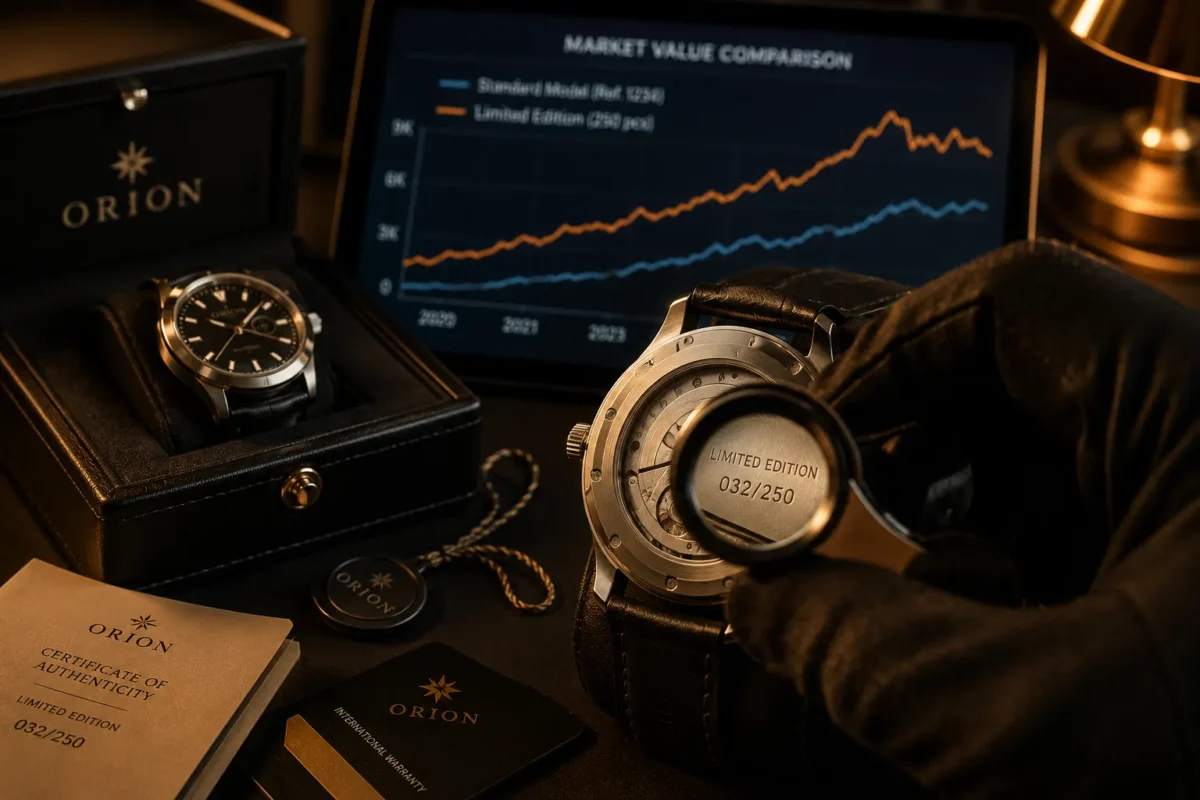
A useful test: search the reference number on Chrono24 and WatchCharts and look at the 24-month price trend. If prices have dropped more than 20% from peak hype, demand was thin.
What Brands Are Known for Valuable Limited Edition Watches?
The brands with the most reliable track record for limited editions that hold or grow value share three traits: long horological history, controlled production, and disciplined distribution. The short list:
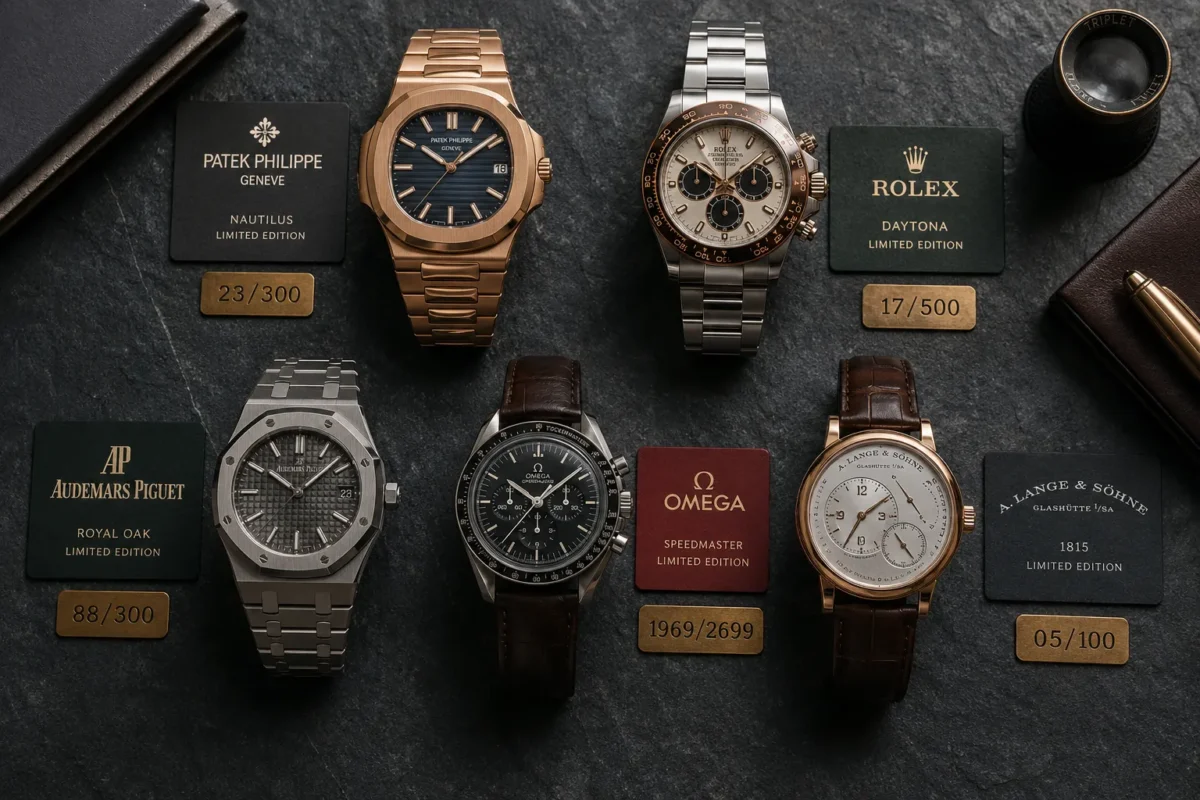
Patek Philippe — The benchmark. Limited references like the 5208R-001 Grand Complication or the 5236P-001 in-line perpetual calendar routinely appreciate. See our guide to the most sought-after Patek Philippe watches.
Rolex — Doesn’t officially label many watches “limited,” but commemorative releases like the Daytona Le Mans and configuration-restricted dials behave like limited editions.
Audemars Piguet — Limited Royal Oak variants, particularly in precious metals or with complications, hold value well.
A. Lange & Söhne — Smaller production by default; limited editions are genuinely scarce.
F.P. Journe — Independent watchmaker with cult demand; limited pieces routinely outperform retail.
Vacheron Constantin — Strong for high complications and historical editions.
Brands to be cautious with: most fashion-house watches, mid-tier Swiss brands producing 5,000+ piece “limited” runs, and microbrands with no resale history.
Are Limited Edition Watches a Good Investment?
Limited edition watches are not a reliable investment for most buyers. A minority appreciate; the majority lose 10-40% of retail value within five years. Buy them because you want to wear them — if they appreciate, that’s a bonus.
The data points worth knowing:
According to Morgan Stanley and WatchCharts’ 2024 market report, the overall secondary-watch market corrected roughly 40% from its 2022 peak before stabilizing.
Even within Patek Philippe and Rolex, individual references can decline. Hype-driven steel sports watches that traded at 200% over retail in 2022 have given back most of those gains.
Holding periods matter. Pieces that consistently appreciate typically need 10+ years and the right kit/condition.
Choose a watch as an investment only if: you have horological knowledge, you can hold for a decade, you’ll keep it pristine with full papers, and you’re comfortable with illiquidity. Otherwise, treat watches as luxury goods that may hold value — not as a portfolio asset. Our high-value luxury watch investment guide covers this in more depth.
What’s the Price Difference Between a Standard and Limited Edition Model?
A limited edition typically carries a 15-50% retail premium over its standard sibling, but the resale gap can swing from -30% to +300% depending on demand.
Rough guidance from current market observations:
Same case, different dial: 15-25% retail premium. Resale premium often disappears if the dial isn’t beloved.
Limited with material upgrade (precious metal, ceramic): 30-80% retail premium. Resale generally tracks metal value plus brand premium.
Limited with complication added: 50-200% retail premium. Best resale performance when the complication is meaningful.
Country/boutique exclusives: 10-30% retail premium. Resale depends on geographic demand mismatch.
Where Can You Buy Reputable Limited Edition Watches?
Buy from authorized dealers, established secondary-market specialists, or auction houses with documented provenance. Each channel has trade-offs.
Authorized dealers (AD): Best for retail allocation, but waitlists for hot pieces can run years. You get full warranty and untouched papers.
Established secondary dealers: Faster access, often the only path to sold-out references. Look for dealers with transparent return policies and authentication guarantees. Mio Jewelry’s authenticity guarantee and consignment program are examples of what to look for.
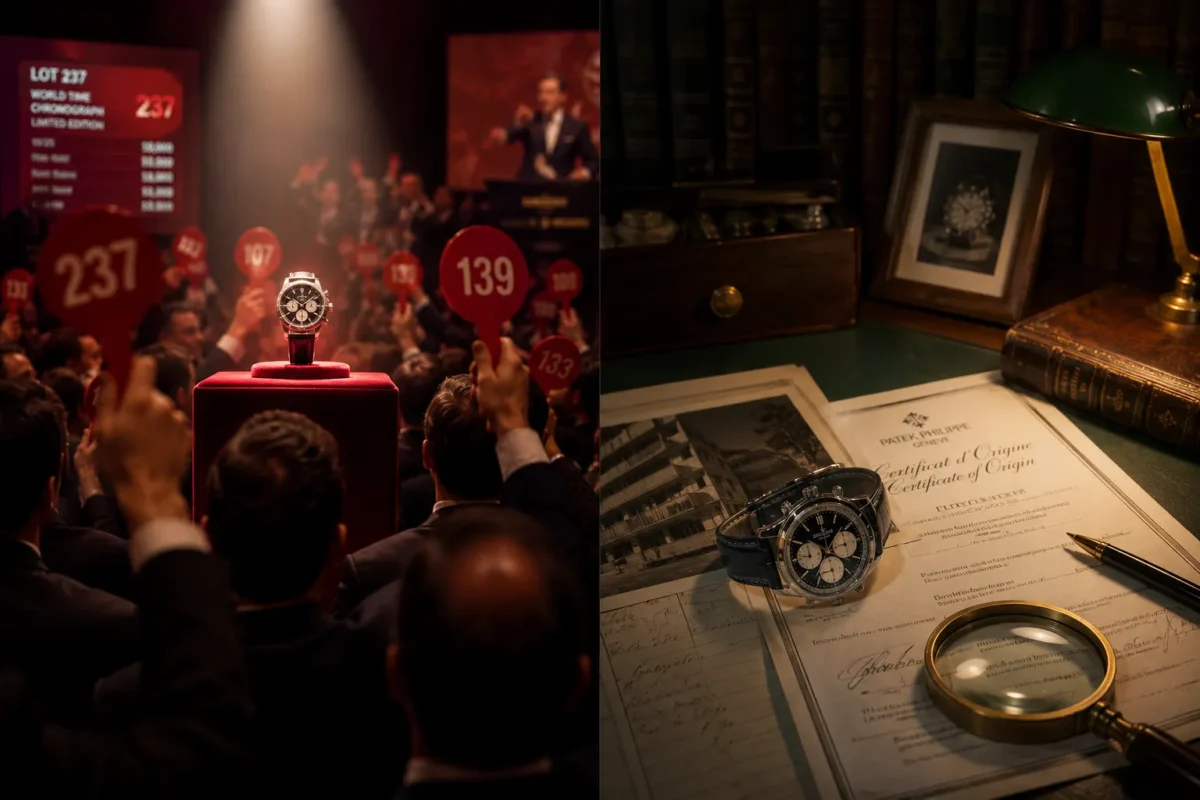
Auction houses (Phillips, Christie’s, Sotheppy’s, Antiquorum): Best for rare vintage and high-value modern limited pieces. Buyer’s premium runs 25-27%.
Avoid: Forum sales without escrow, social media “deals,” and any seller who can’t provide serial numbers, original papers, or a verifiable address.
Red flags: Prices significantly below market, refusal to share serial numbers before purchase, missing original box/papers without a discount reflecting it, and pressure to close fast.
How Does Scarcity Affect a Limited Edition Watch’s Value?
Scarcity matters, but only when paired with demand. A 50-piece run from an unknown brand is rarer than a 1,000-piece run from Patek Philippe, yet the Patek will almost certainly hold more value. Demand multiplies scarcity. Without demand, scarcity is irrelevant.
Three scarcity tiers worth understanding:
Genuinely rare (under 100 pieces): High-end independents, special commissions. Value driven by demand depth in a small collector pool.
Limited (100-1,000 pieces): Sweet spot for major brands. Enough scarcity to matter, enough production for a liquid secondary market.
“Limited” in name only (1,000-10,000+): Marketing scarcity. Often trades at or below the standard model after the initial hype fades.
Common mistake: Assuming a low edition number guarantees value. Reference how to read watch reference and serial numbers so you can verify what you’re actually buying.
Do Limited Edition Watches Always Increase in Value Over Time?
No. The majority of limited editions either depreciate or track inflation. Only a minority — typically from top-tier brands with proven demand — appreciate meaningfully in real terms.
A reasonable expectation:
60-70% lose value or tread water over 5-10 years.
20-30% hold value roughly in line with retail (after accounting for inflation).
5-10% appreciate meaningfully, sometimes dramatically.
The watches in that top 5-10% almost always share traits: storied brand, technical or historical significance, low production, exceptional condition, and complete documentation.
What Are Common Misconceptions About Limited Edition Watches?
“Limited means rare.” Often false. Many “limited” runs exceed 5,000 pieces.
“All limited editions appreciate.” Most don’t. Data from major secondary marketplaces consistently shows this.
“Lower edition numbers are worth more.” Mostly a myth. A few collectors pay a small premium for #1 or matching numbers (lucky 7, 8), but in most cases the spread is negligible.
“A celebrity wore it, so it must be valuable.” Celebrity exposure spikes short-term hype, not long-term value.
“Steel sports watches always go up.” The 2022-2024 correction proved otherwise.
“Buying at retail guarantees a profit.” Retail allocations on hot references happen, but flipping them is a narrowing margin and many brands now blacklist flippers.
What’s an Example of a Limited Edition Watch That Failed to Gain Value?
Plenty of cautionary tales exist. A few illustrative categories (without singling out specific references the market has moved past):
Fashion-brand “limited” chronographs (5,000+ pieces): Often sell 40-60% below retail within two years.
Celebrity collaboration editions from mid-tier brands: Spike at launch on social media, then deflate sharply.
Color-variant “limiteds” with no mechanical change: Frequently trade at standard-model prices once novelty fades.
Overproduced anniversary editions: When a brand releases 10,000 pieces to mark a milestone, supply usually overwhelms demand.
The pattern: weak brand pedigree plus high production plus marketing-driven story equals depreciation. Always check 24-36 month resale data on Chrono24 or WatchCharts before committing.
How Does Condition Affect the Resale Value of a Limited Edition Watch?
Condition is the single biggest swing factor outside of brand and reference. A pristine, full-set limited edition can sell for 30-50% more than the same reference in worn condition without papers.
What buyers grade:
Case condition: Original sharp edges, unpolished. Polishing can reduce value 10-20% on collector pieces.
Dial and hands: Original, no aftermarket service replacements. Patina is acceptable on vintage; defects are not.
Movement: Serviced by brand or authorized service center, with records.
Full set: Original box, papers, warranty card, hangtags, stickers, and any accessories. Missing papers alone can drop value 15-25%.
Service history: Documented servicing adds confidence.
Want to keep condition top-tier? Follow our step-by-step guide to cleaning a luxury watch and avoid polishing unless absolutely necessary.
What Are Common Mistakes When Buying a Limited Edition Watch?
Buying purely on hype. If your reason is “everyone wants it,” you’re probably late.
Skipping authentication. Counterfeits are increasingly sophisticated. Use a reputable dealer with verification expertise; see our guide on how to spot a fake Rolex.
Overpaying at peak hype. Markets cycle. Pay attention to 24-month price trends.
Ignoring papers. No box and papers? Negotiate hard or walk away.
Confusing “limited” with “exclusive.” A 10,000-piece run isn’t exclusive.
Flipping plans that ignore taxes. Capital gains on watches sold above purchase price are taxable in most jurisdictions.
Storing poorly. Magnetism, moisture, and impact damage erode value silently.
Who Should Buy a Limited Edition Watch — and Who Shouldn’t?
Limited editions make sense for:
Collectors with a clear thematic focus (brand, era, complication) who want pieces that complete their collection.
High-net-worth buyers who genuinely love the design and consider appreciation incidental.
Patient holders willing to keep watches 10+ years with full original kit.
Buyers with access to trusted dealers and authentication expertise.
Limited editions are probably not for:
First-time luxury watch buyers — start with proven standard references like a Rolex Submariner or a classic Cartier Tank.
Anyone treating watches as a primary investment vehicle. Use proper financial instruments instead.
Short-term flippers without dealer relationships and tax planning.
Buyers without secure storage, insurance, or maintenance discipline.
Anyone who can’t comfortably tie up six figures in an illiquid asset.
Pros and Cons of Buying Limited Edition Watches
Pros:
Tangible enjoyment — you can actually wear the asset.
Strong examples have outperformed many traditional asset classes over 20+ year horizons.
Cultural and emotional significance beyond financial return.
Diversification away from paper assets.
Heirloom potential.
Cons:
Illiquid; selling can take weeks or months at full value.
High transaction costs (dealer margins, auction premiums).
Vulnerable to market hype cycles and brand strategy changes.
Storage, insurance, and servicing costs add up.
Counterfeit risk is real and growing.
Frequently Asked Questions
Is a limited edition watch always more valuable than a standard model?
No. Many limited editions trade at or below the standard model’s price on the secondary market once the launch hype fades. Brand strength and demand matter more than the “limited” label.
How many pieces should a “true” limited edition be?
There’s no formal rule, but collectors generally view runs under 500 pieces as meaningfully limited. Anything above 5,000 is marketing scarcity.
Do I need the original box and papers to resell?
You can sell without them, but expect a 15-25% discount versus a full-set example. For high-value pieces, missing papers is a serious red flag for buyers.
Should I service my limited edition watch?
Yes, but only at the brand’s official service center and only when necessary. Keep all service records. Avoid case polishing if the watch is collector-grade.
Can I insure a limited edition watch?
Yes. Specialty jewelry insurers (Jewelers Mutual, Chubb) cover watches at agreed value with appraisal. Standard homeowner policies usually have low jewelry sublimits.
What’s the safest entry point into limited editions?
Start with a well-documented piece from a top-five brand in the 100-500 production range, bought from an authorized dealer or established secondary specialist with an authenticity guarantee.
How do I verify the edition number is real?
Check the caseback engraving against the warranty card and brand archive (Patek Philippe issues Extracts from the Archives; many brands offer similar verification). A reputable dealer will confirm this before sale.
Are vintage limited editions safer than modern ones?
Vintage pieces have established price histories, but condition risk and authentication complexity are higher. Modern limited editions have shorter track records but cleaner provenance.
Conclusion: How to Approach Limited Edition Watches Smartly
Limited editions watches: hype vs. real collector value isn’t a debate with one answer — it’s a framework you apply to each piece. The watches that hold and grow value share a small set of traits: respected brand, transparent and genuinely low production, mechanical or historical significance, pristine condition with full papers, and demand you can verify in secondary-market data, not social media noise.
Your next steps:
Define why you’re buying. Passion, collection focus, or potential appreciation — be honest.
Set a budget that includes insurance, servicing, and a 10-year holding plan.
Research the specific reference’s 24-36 month price history before committing.
Buy only from dealers with authentication guarantees and clear return policies. Browse vetted inventory at Mio Jewelry’s luxury watch collection or speak with a specialist about consignment and sourcing.
Document everything: receipts, papers, service records, photos. Future-you will thank you.
The best collectors buy what they love, hold what they buy, and treat appreciation as a happy accident. Apply that discipline and you’ll avoid almost every common mistake in this market.
Sources
WatchCharts Index Reports, 2023-2024
Morgan Stanley and LuxeConsult Swiss Watch Industry Report, 2024
Phillips, Christie’s, and Sotheby’s published auction results, 2022-2024
Federation of the Swiss Watch Industry export data, 2024